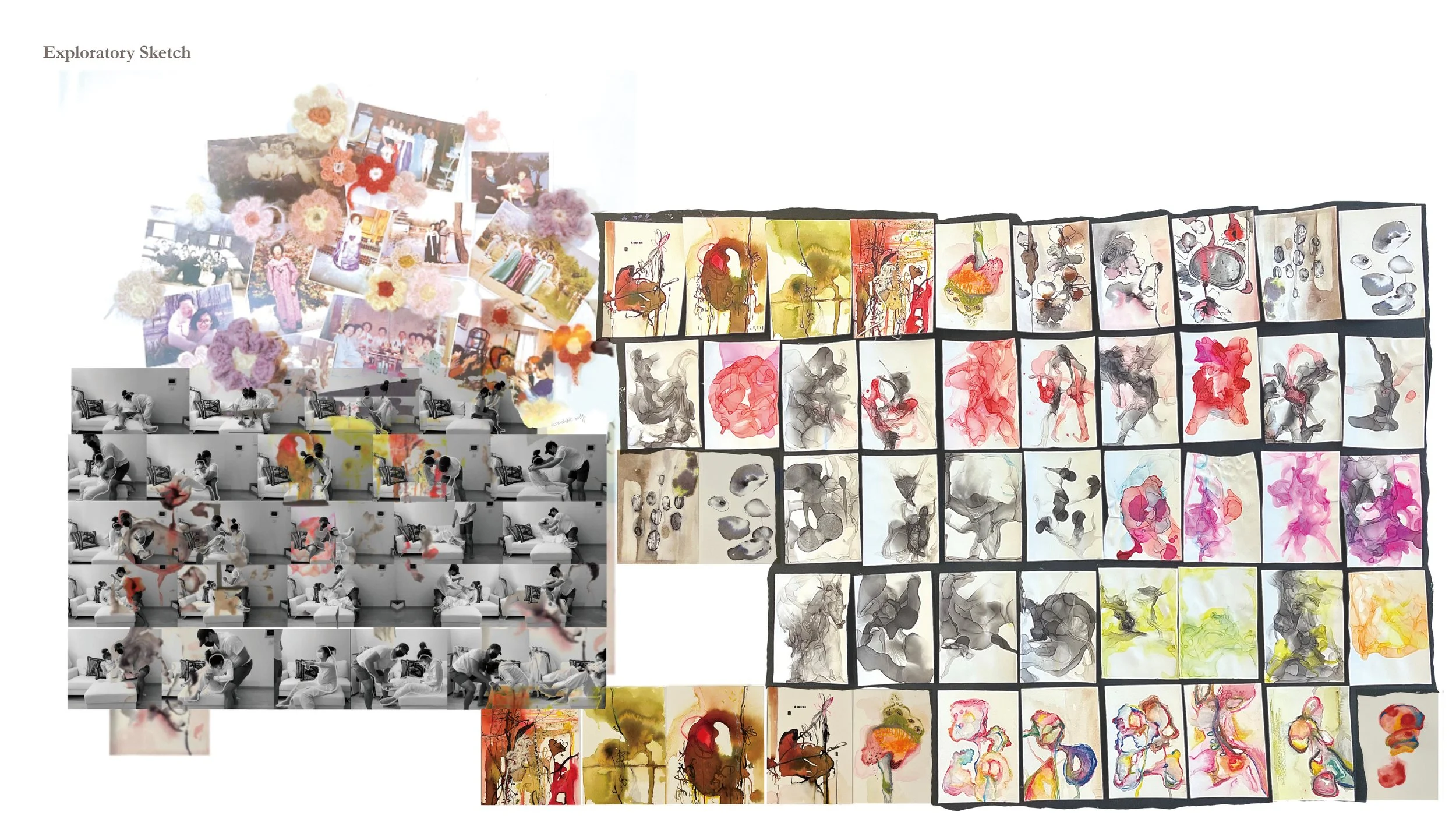
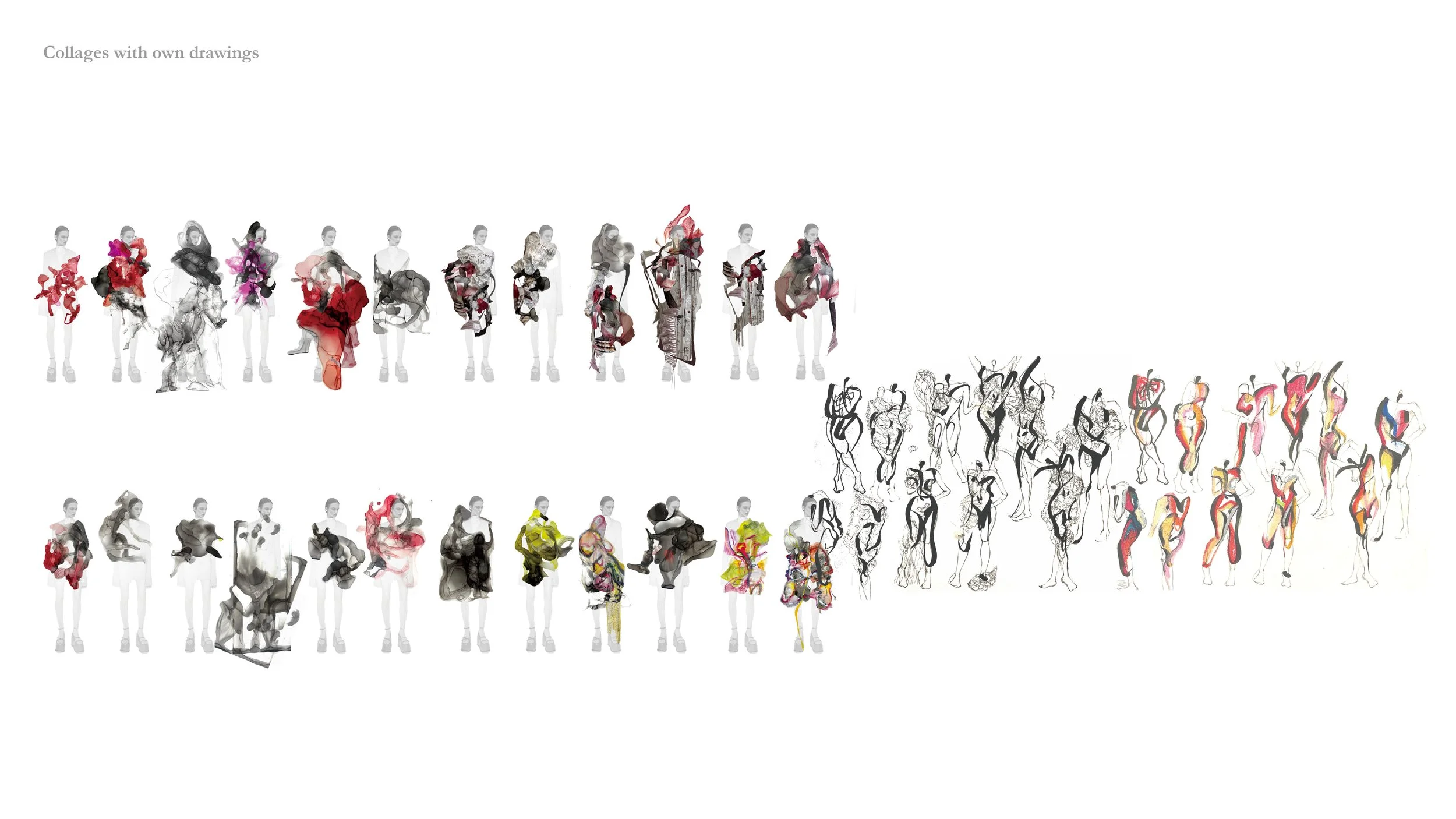
最初は水彩を使った小さなドローイングを制作しました。これらのシルエットは計画して描いたものではなく、祖母への想いを筆に託す うちに自然に現れた即興の表現です。この感情的な初期のドローイングが、本作の重要となる出発点となりました。
I began with small water based acrylic paint drawings. The silhouettes emerged spontaneously—unplanned marks that flowed from expressing feelings toward my grandmother through the brush. These initial drawings have became the key for my later collection.
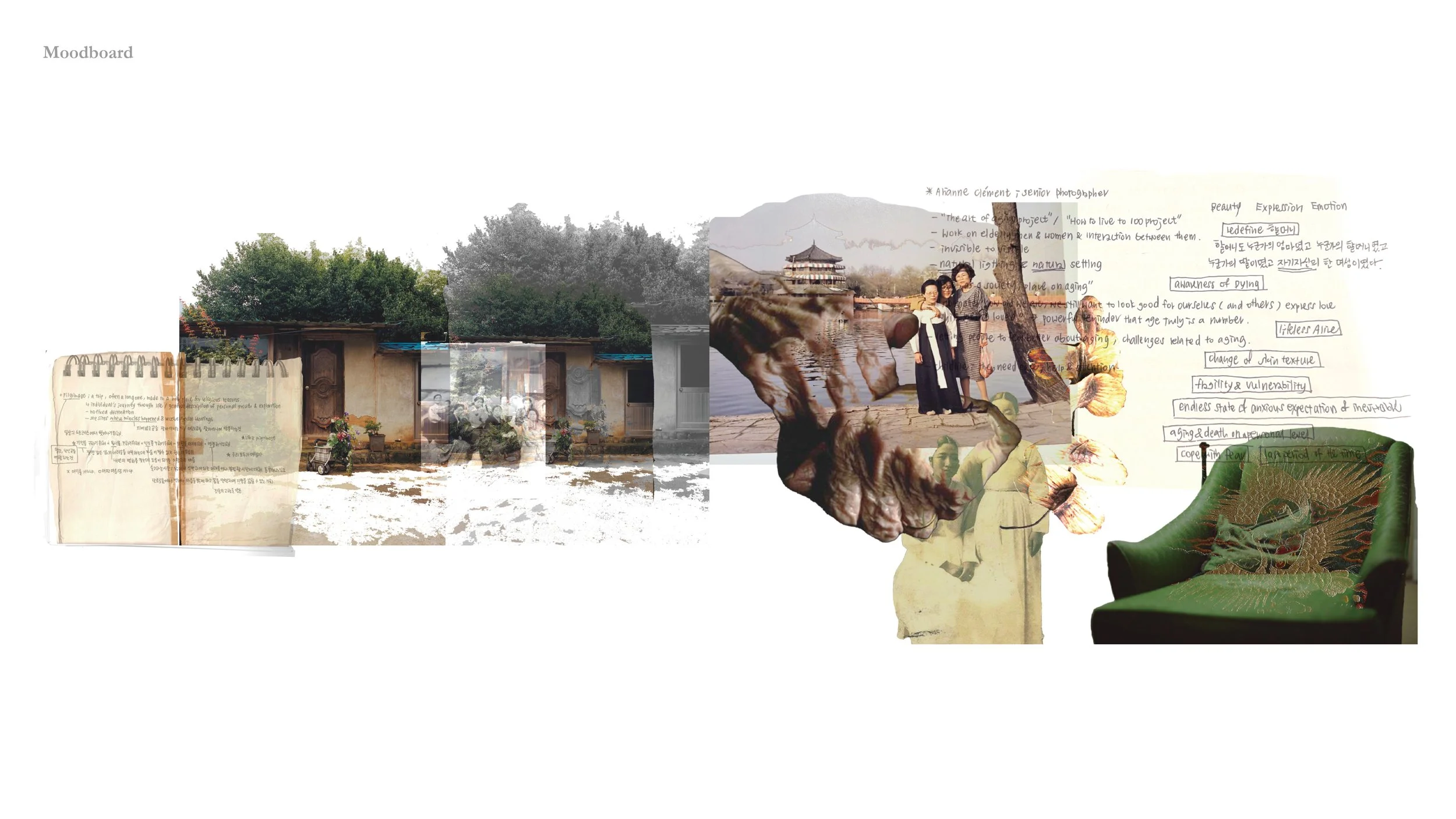
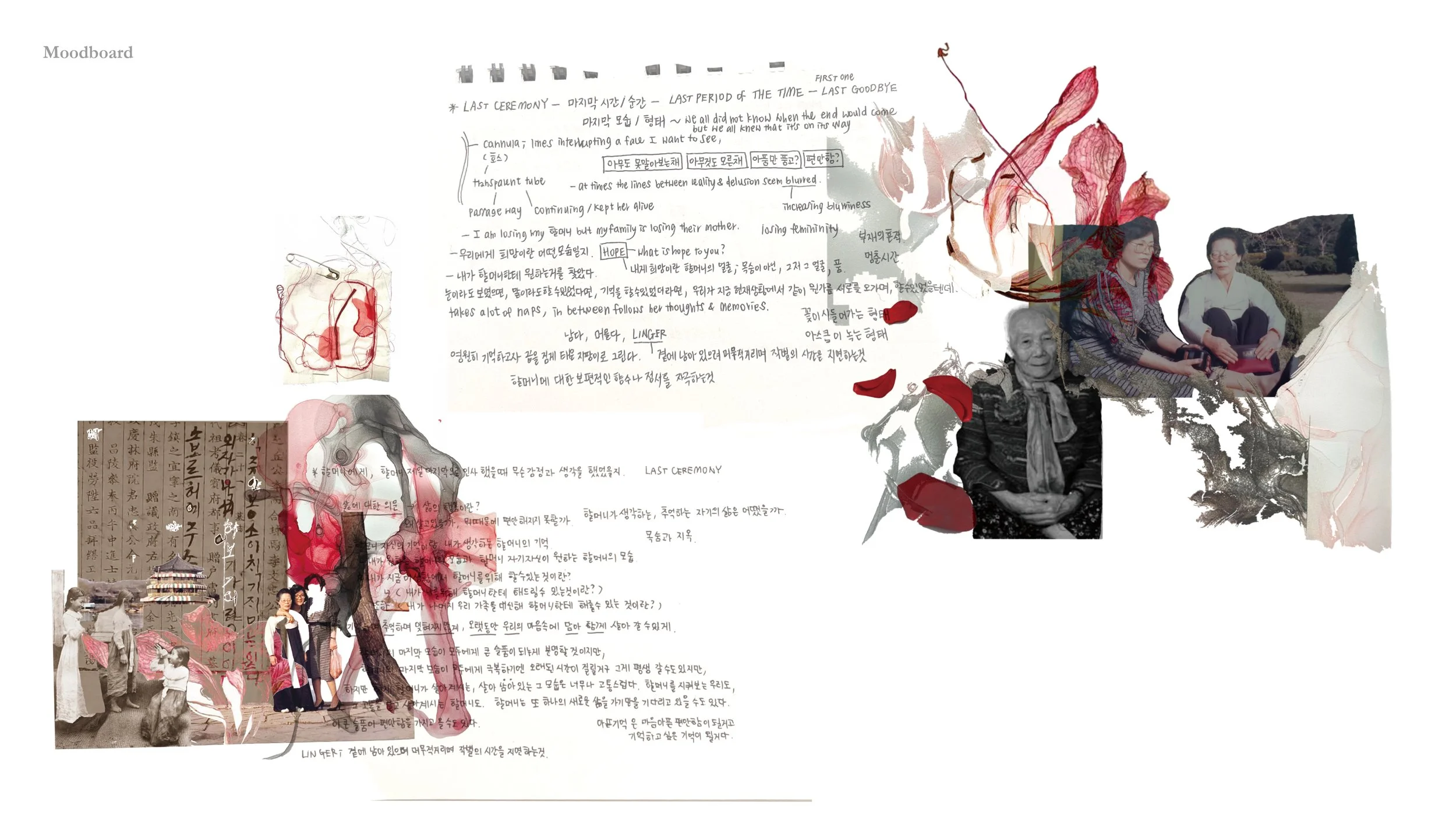
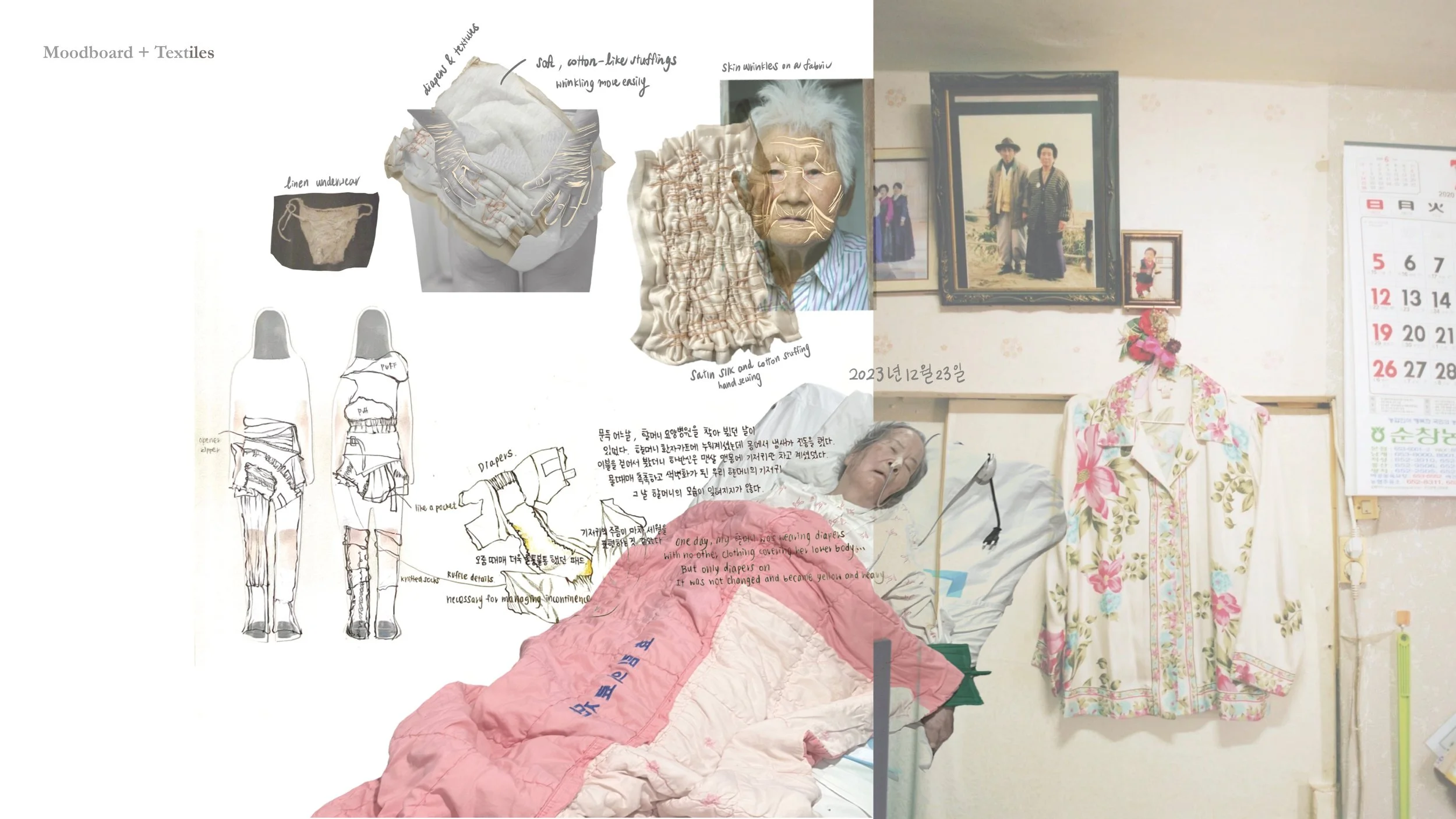
祖母の写真や初期ドローイング、感情的な記憶を組み合わせてムードボードを制作しました。
This was the foundation of my design journey. Created a mood board using my grandmother’s photographs, my initial drawings, and emotional reflections.
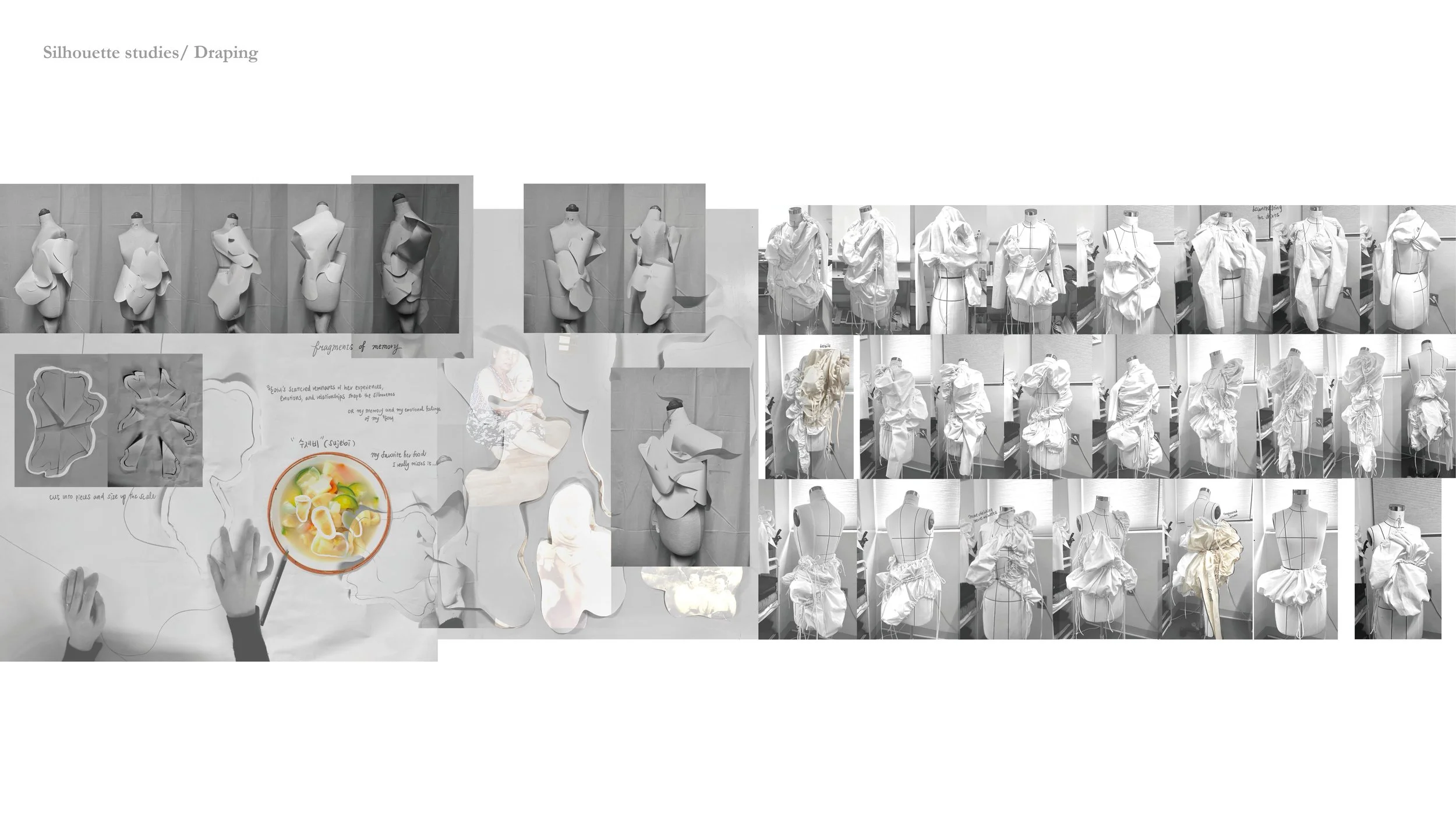
子どもの頃に大好きだった料理は祖母とよく一緒に作った「수제비」(Sujebi)でした。日本では小麦粉をちぎって入れる温かいすいとんのような汁物で、その形はいつも違い、その瞬間の手の感覚で生まれるものでした。祖母を思い出し、複雑な記憶を重ねるうちに、ばらばらの記憶の断片と「수제비」の形が重なり合い、シルエットの着想となりました。
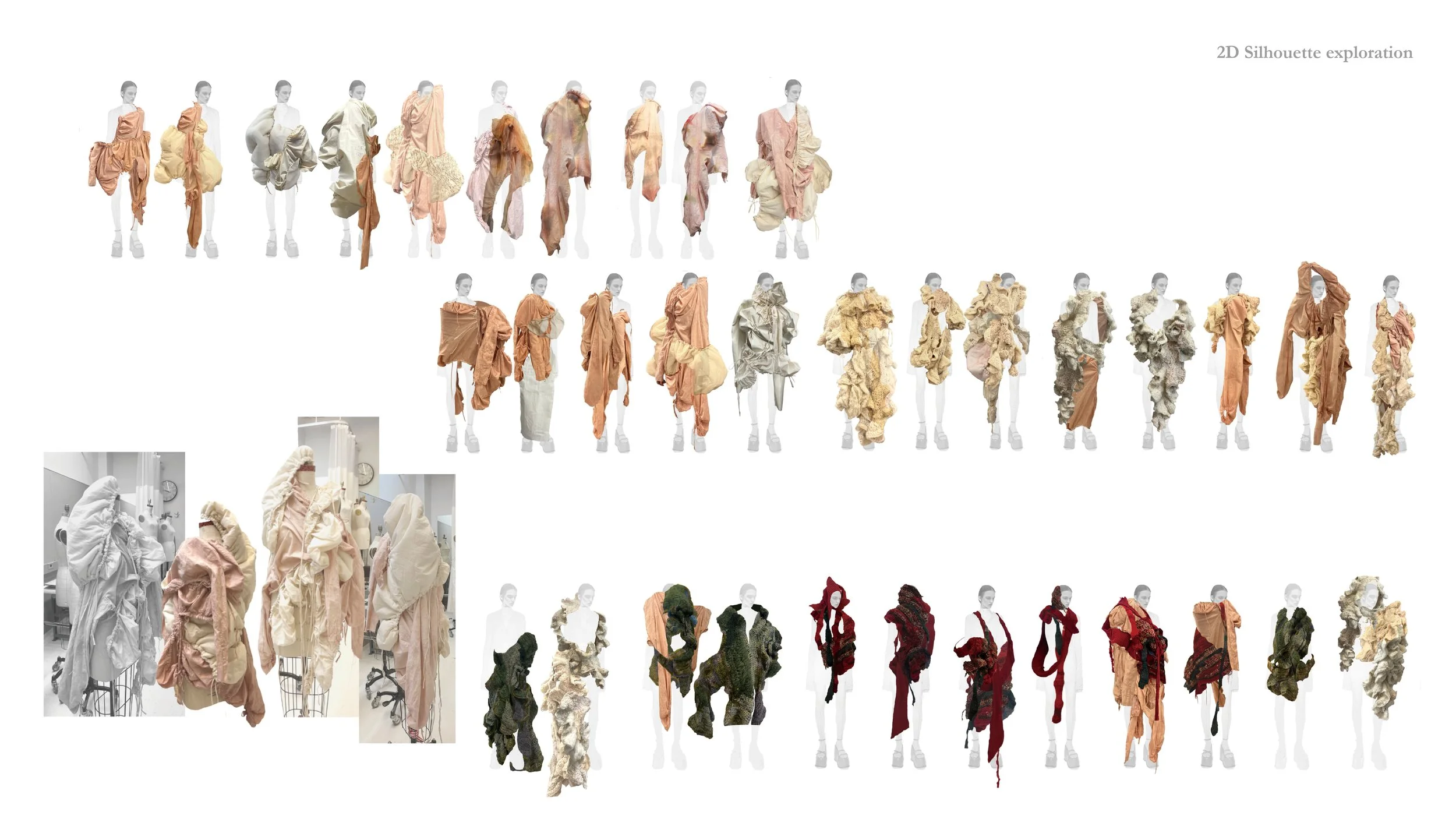
まず、小さな布片を切り出し、小型のトルソーでドレーピングを始めました。次に、布を大きく切り直し、実物大のトルソーにモスリンで ドレーピングを行いました。
My childhood’s favorite food was Sujebi, a warm hand-torn wheat flour soup that I often made together with my grandmother. Each piece of sujebi always had a different shape, created spontaneously in the moment. When reflecting on my complex memories of halmoni, various forms were explored: scattered fragments of her experiences, emotions, and relationships. These fragments became the inspiration for my silhouettes.
I began draping on a small mannequin, cutting fabric into small portions to echo the irregular shapes. And I scaled up the pieces and continued draping with muslin on a full-sized form.
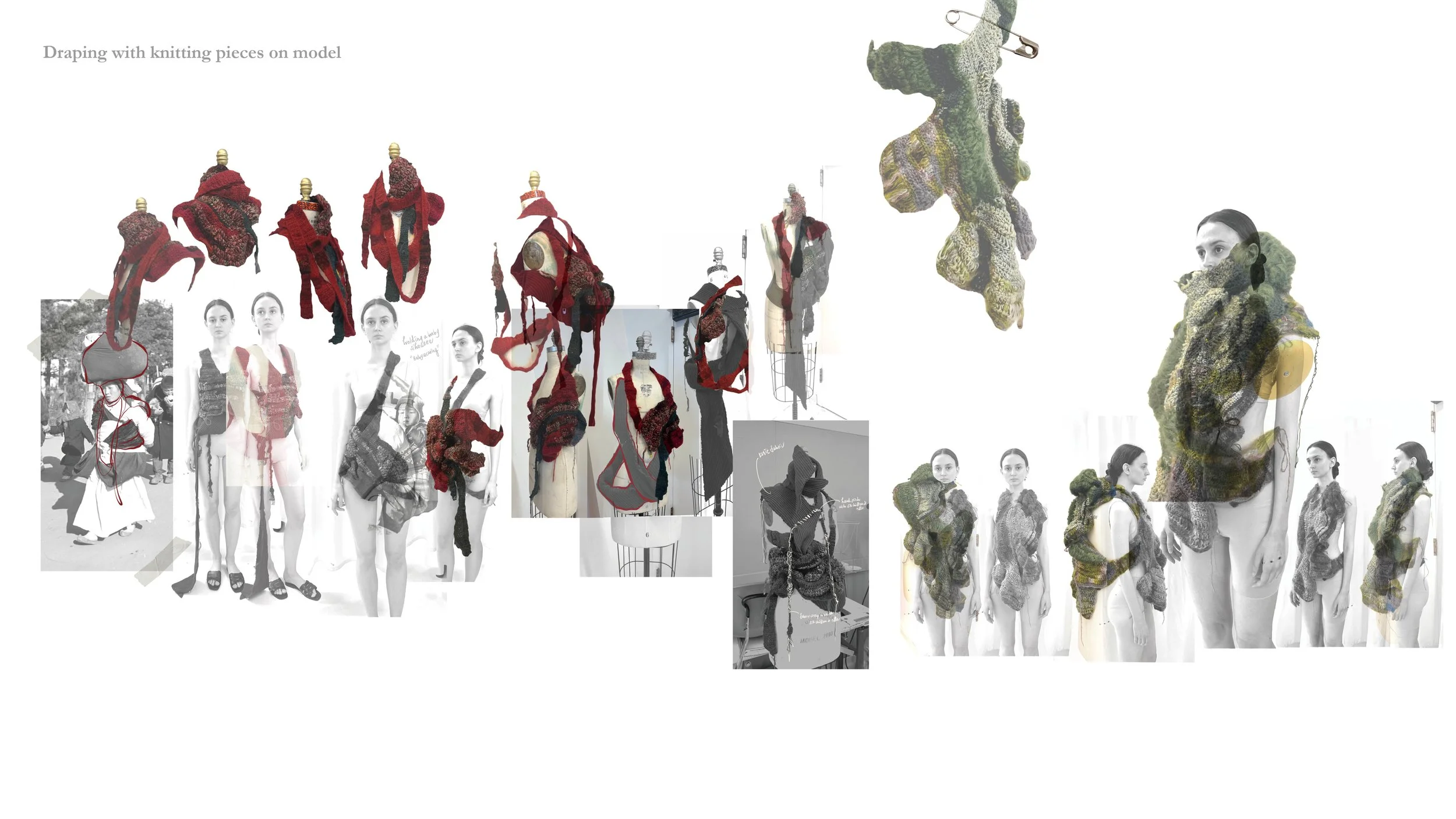
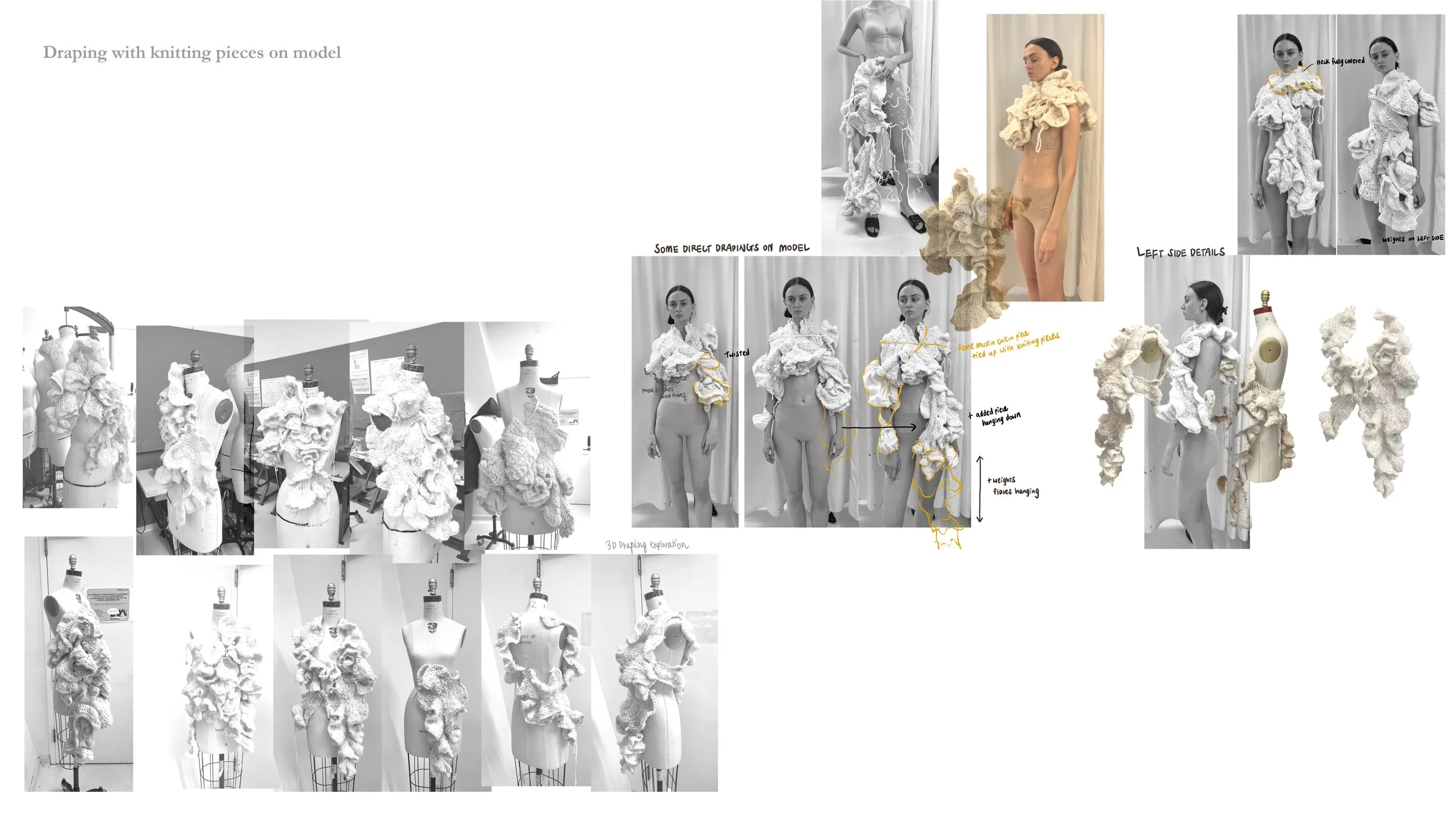
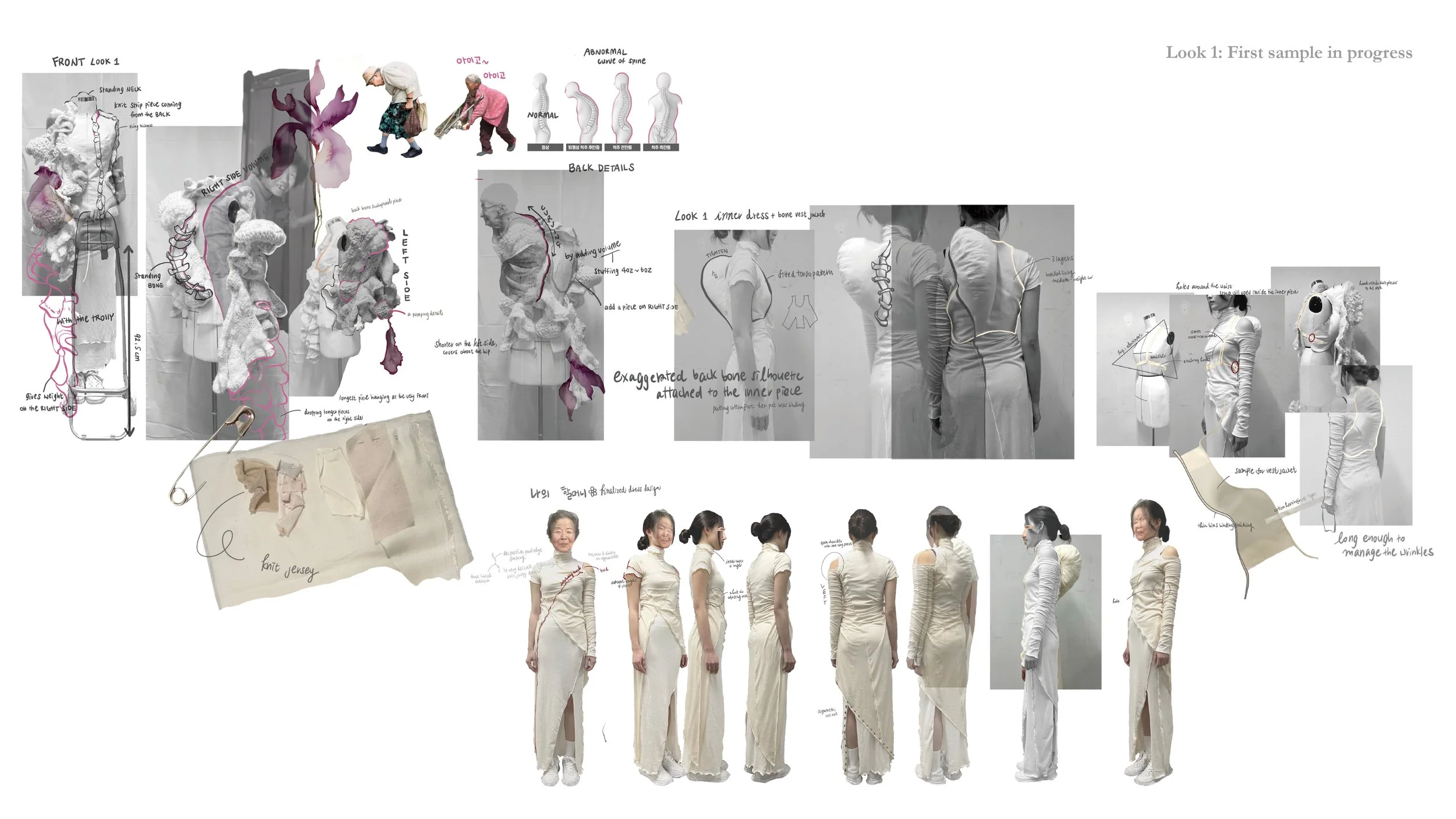
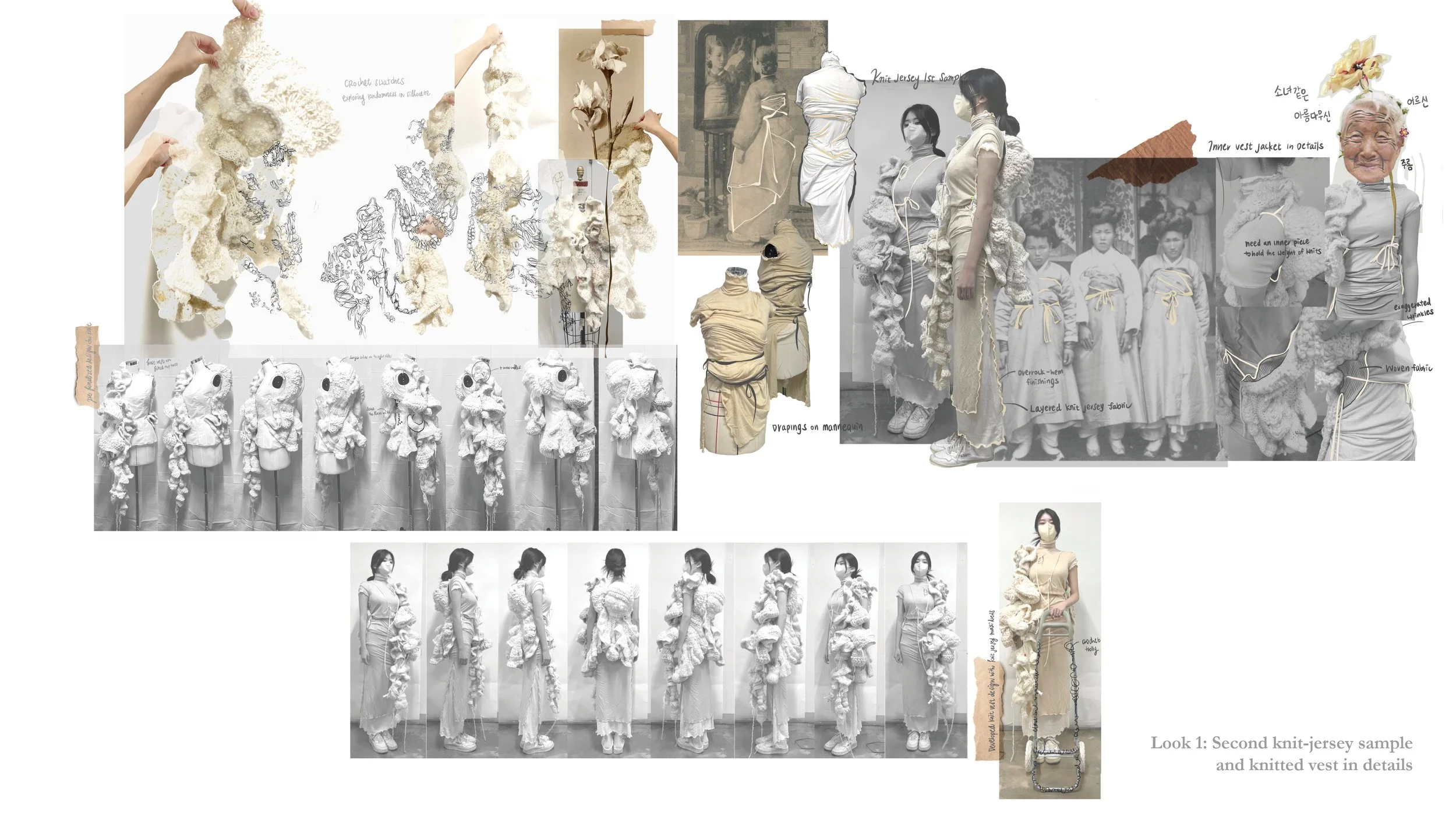

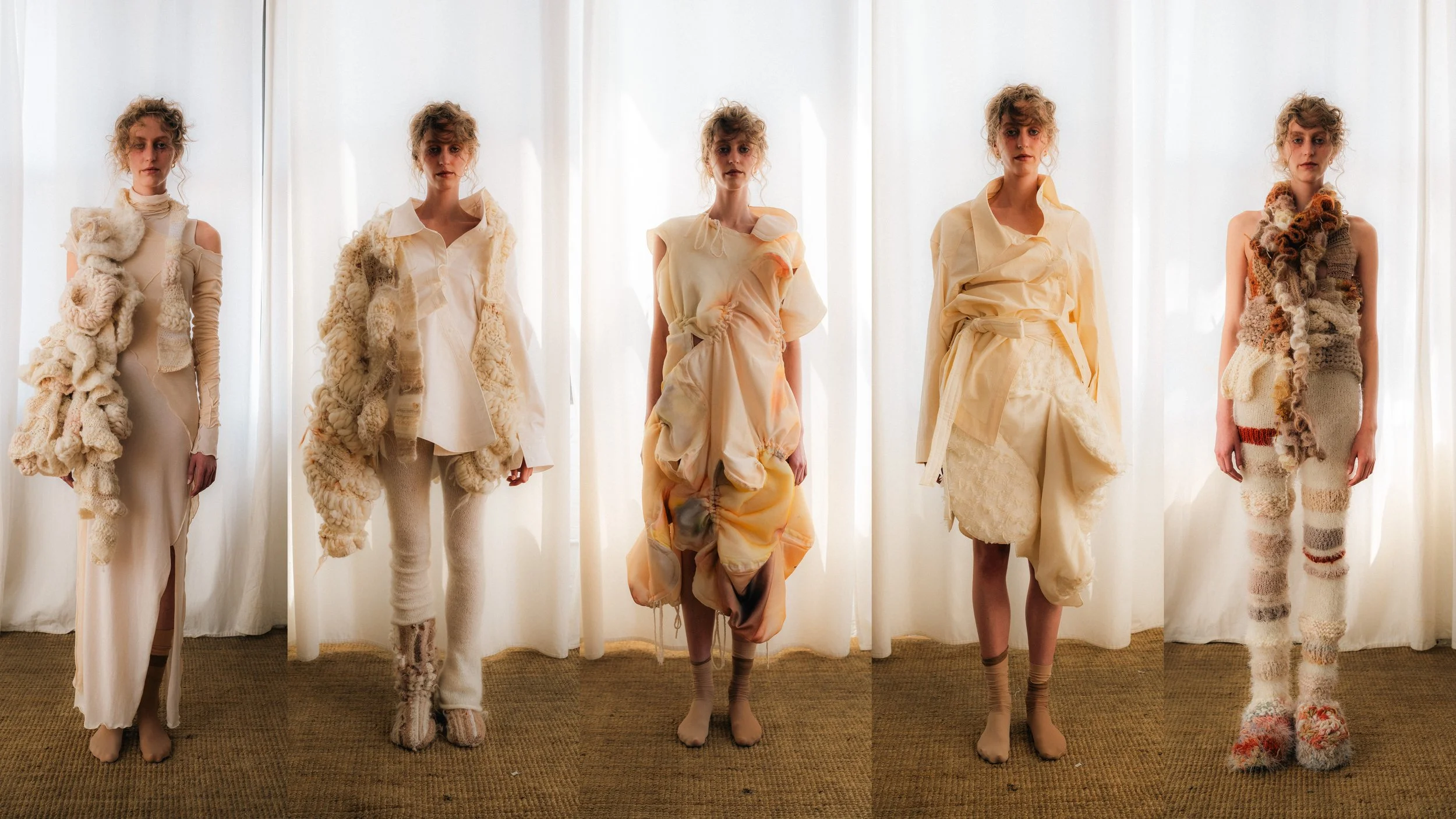
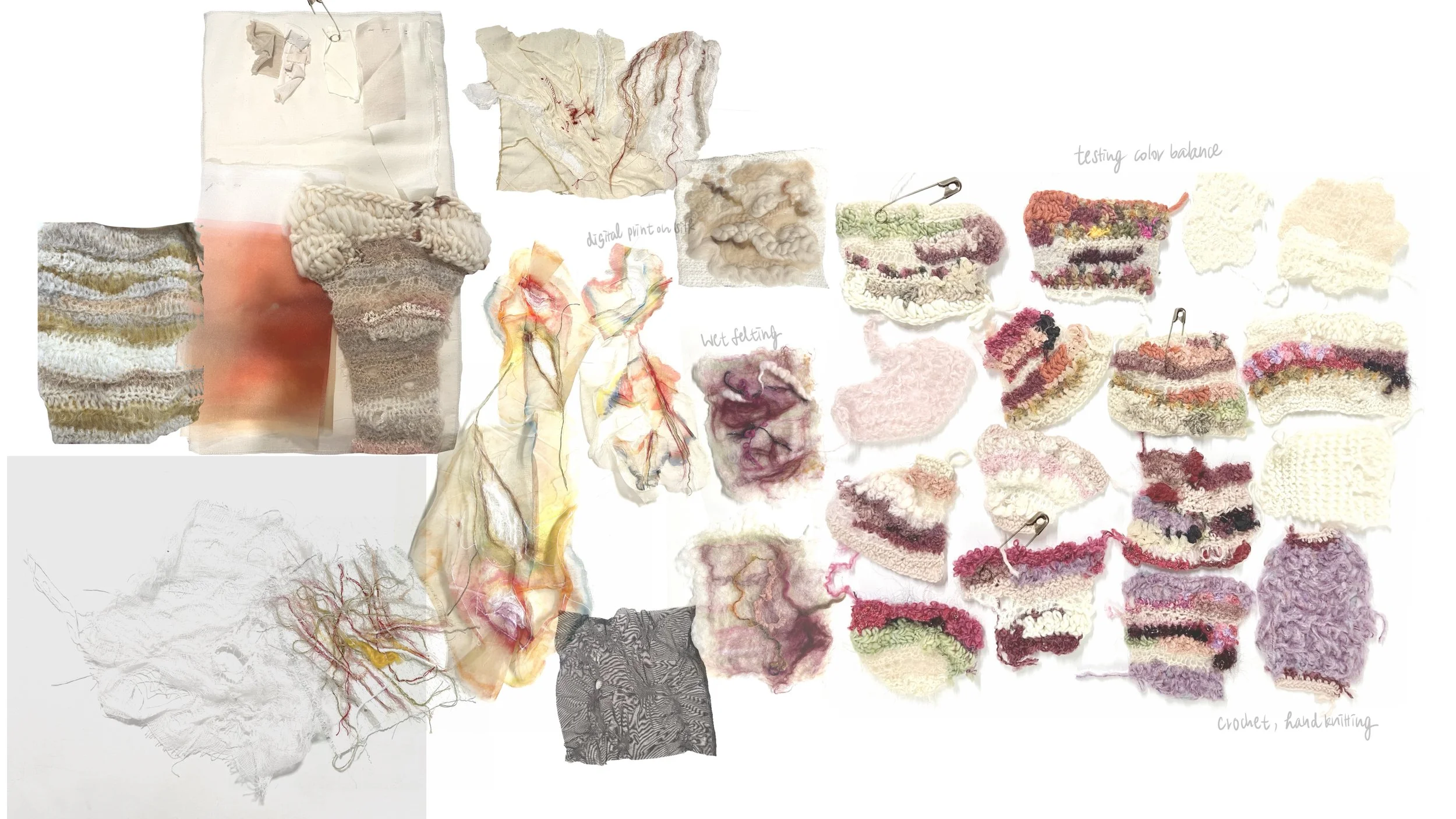
最初のルックは、ニットジャージー素材を用いたアシンメトリーなカットアウト入りレイヤード・マキシドレスに、クロシェ編みのベストを組み合わせたものです。先に描いたドローイングと同様に、クロシェの一つひとつのピースは、祖母への想いや記憶を形にしたもので、 決まったパターンはなく、感情を編み出した表現法です。このルックのハイライトの一つは、祖母の背骨を思わせる彫刻的なカーブです。中に詰め物を加えてボリュームを出し、異常に曲がった背骨のシルエットを再現しました。また、祖母が外出時に必ず使っていたキャリーカート(Trolley)から着想を得て、その全体を編み込みで表現しました。又、ドレスの重みを支えられるようニットを設計し、着用可能な構造に仕上げました。ドレスのニットジャージー素材は、祖母の肌着(インナーウェア)を思わせるように、薄く、柔らかく、伸縮性のある二重構造を採用しています。アシンメトリーなカットアウトは、どこか歪んだ印象を与えます。よく見ると、内側のレイヤーをあえて長くし、祖母が寒さを避けるために常に重ね着をしていた習慣を表現しています。
The first look is a knit-jersey asymmetric cutout layered maxi dress paired with a crochet knit vest. As with my earlier drawings, each crochet piece embodies my feelings and memories of my grandmother. There is no fixed pattern—no right or wrong—only an honest release of expression. One highlight of this look is the sculptural curve at the back, inspired by how she was. By adding padding and volume, I created a sculptural backbone piece to represent the abnormal curvature she carried. Another element comes from the trolley she always used when going out—I attempted to knit over its every part, bringing that memory into each single piece. The knit structure was made wearable, designed to hold the weight of the dress. The knit jersey fabric was chosen to resemble her thermal underwear—thin, soft, stretchy, and layered. The asymmetric cutouts create a slightly distorted look. Upon closer observation, you can notice the contrast in length between the first and second layers: the inner layers are intentionally longer, inspired by my halmoni’s habit of always wearing multiple layers to protect herself from the cold.
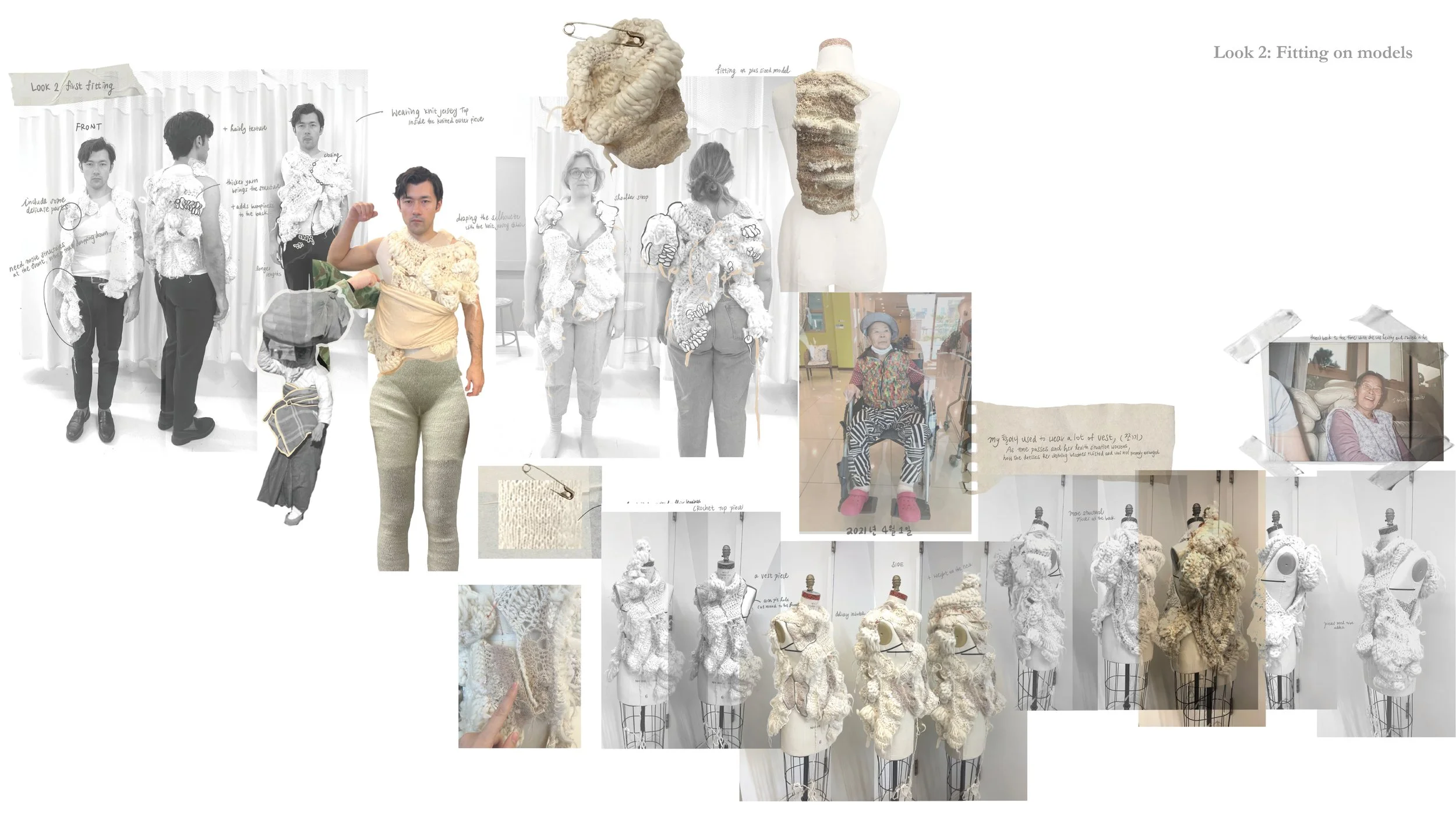
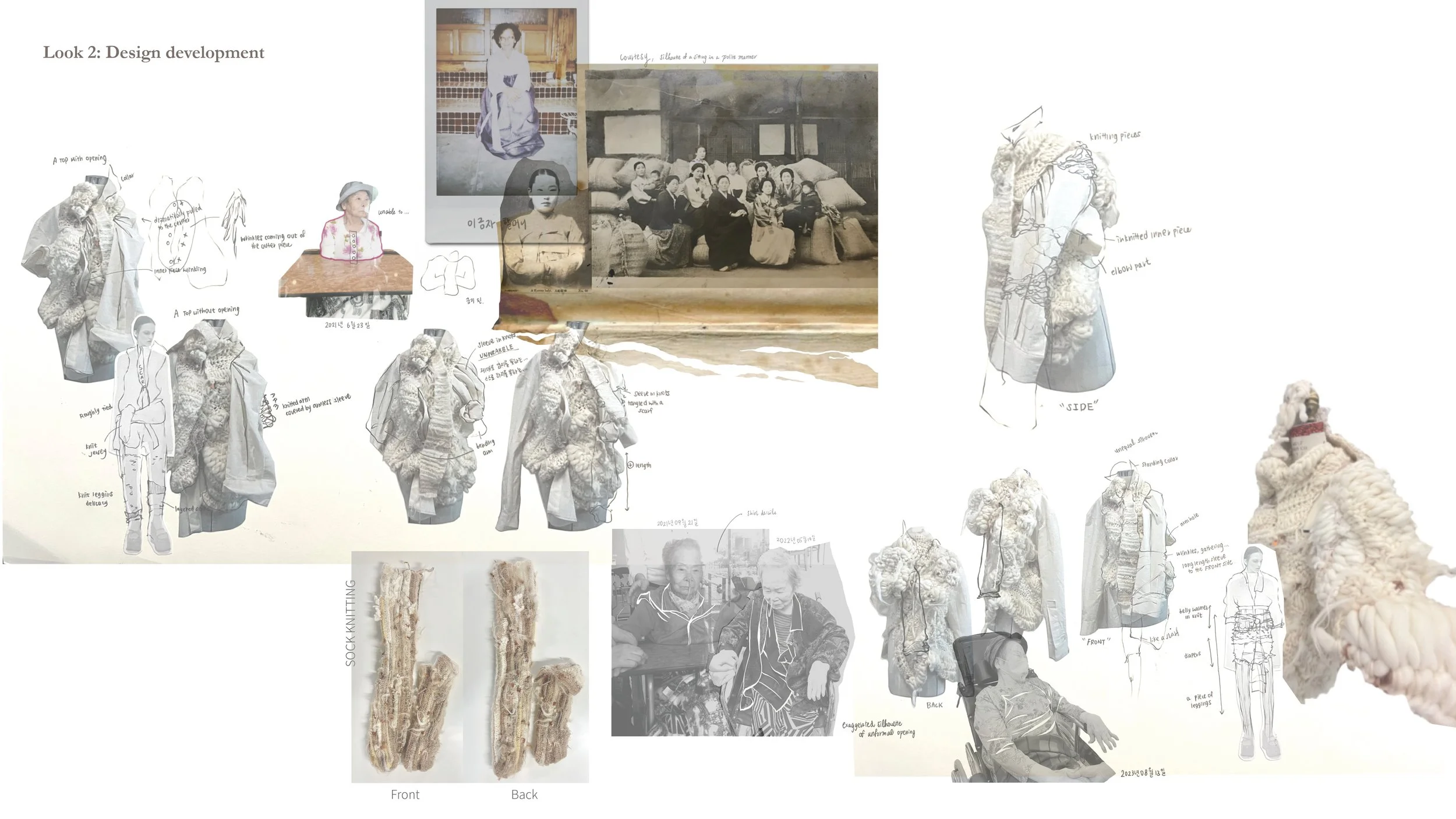
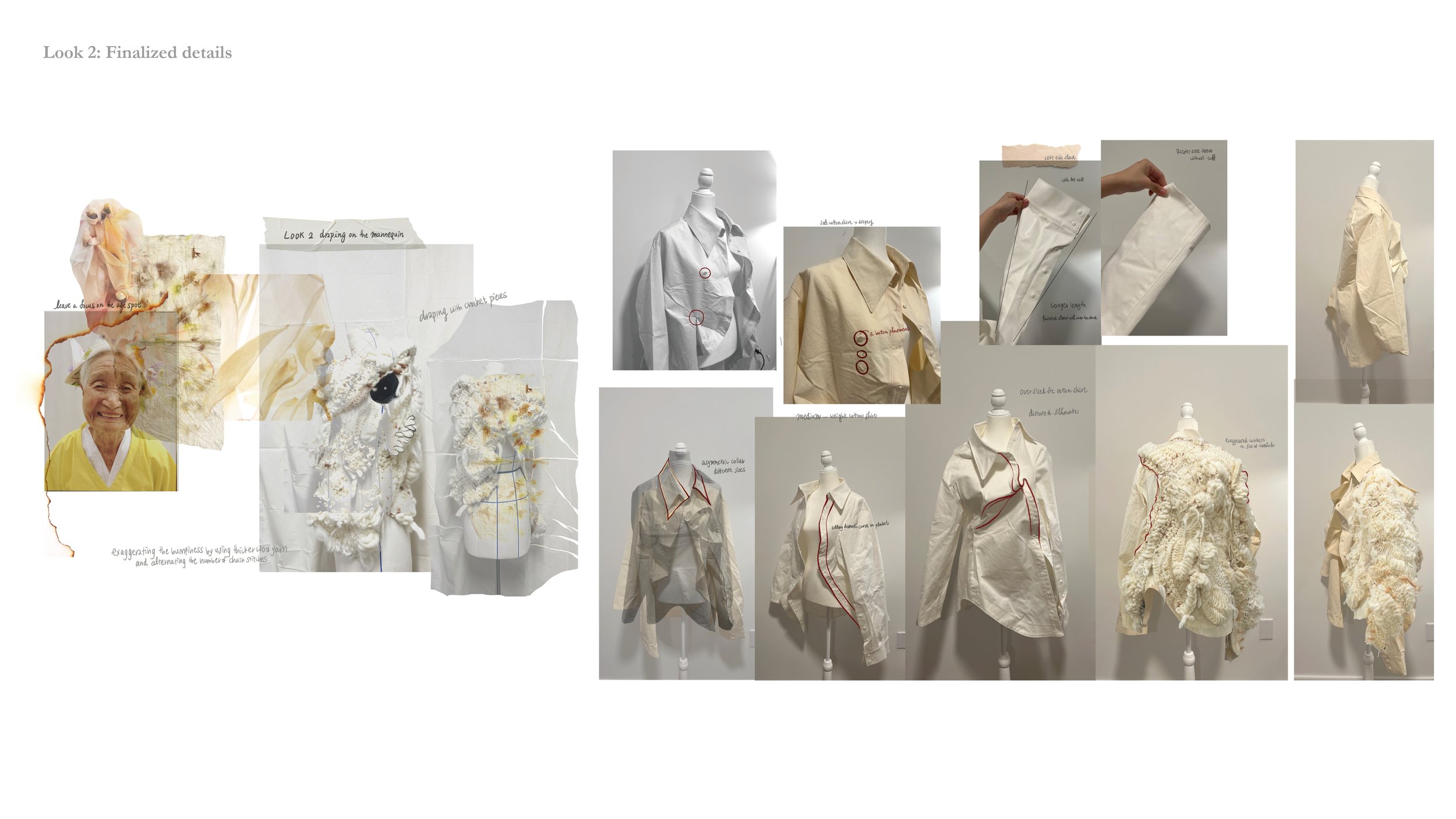
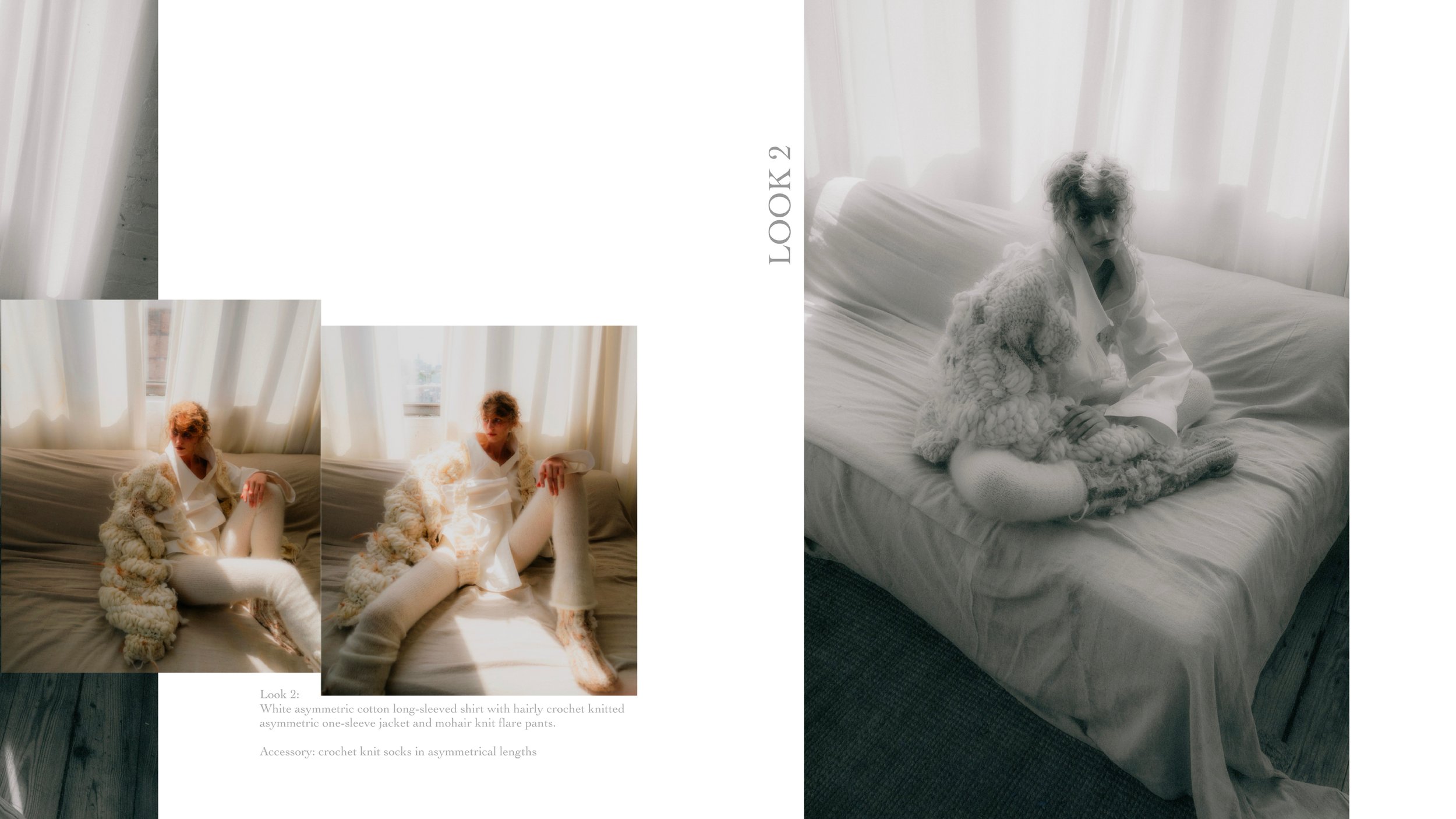
2つ目のルックは、白のアシンメトリーなオーバーサイズのコットン長袖シャツに、毛足の長いクロシェ編みの片袖ジャケット、そしてモヘアニットのフレアパンツを合わせ、アクセサリーとして左右非対称のクロシェ編みソックスを加えています。このルックでは、毛足のあるウール糸を使用し、端をあえて処理せず残すことで、健康だった頃の祖母のふわふわでカールした髪を思い起こさせています。また、誇張された凹凸感は祖母の肌のしわを映し出し、優しさと不完全さを同時に宿しています。シャツは大胆なアシンメトリーで構築されており、前立て、袖の長さ、左右のアームホールのコントラスト、襟の形や深さに明確な差異を持たせています。これらは、かつて介護施設で祖母に会うたびに目にした、少し不揃いな服の着こなしを連想させ、その姿をシルエットとして表現しています。
The second look is a white asymmetric oversized cotton long-sleeved shirt paired with a hairy crochet knitted one-sleeve jacket and mohair knit flare pants, accessorized with asymmetrical knit socks. For this look, I chose hairy wool yarn and intentionally created raw edges, reminiscent of my grandmother’s fluffy, curly hair when she was healthy. The exaggerated bumpiness also reflects the wrinkles of her skin, carrying both tenderness and imperfection into the garment. The shirt is deliberately constructed with dramatic asymmetry—the placket, sleeve lengths, contrasting armholes, and uneven collar depth—all evoking the way my grandmother dressed whenever I visited her in the nursing home. This asymmetrical silhouette became a way to capture both her vulnerability and her enduring individuality.
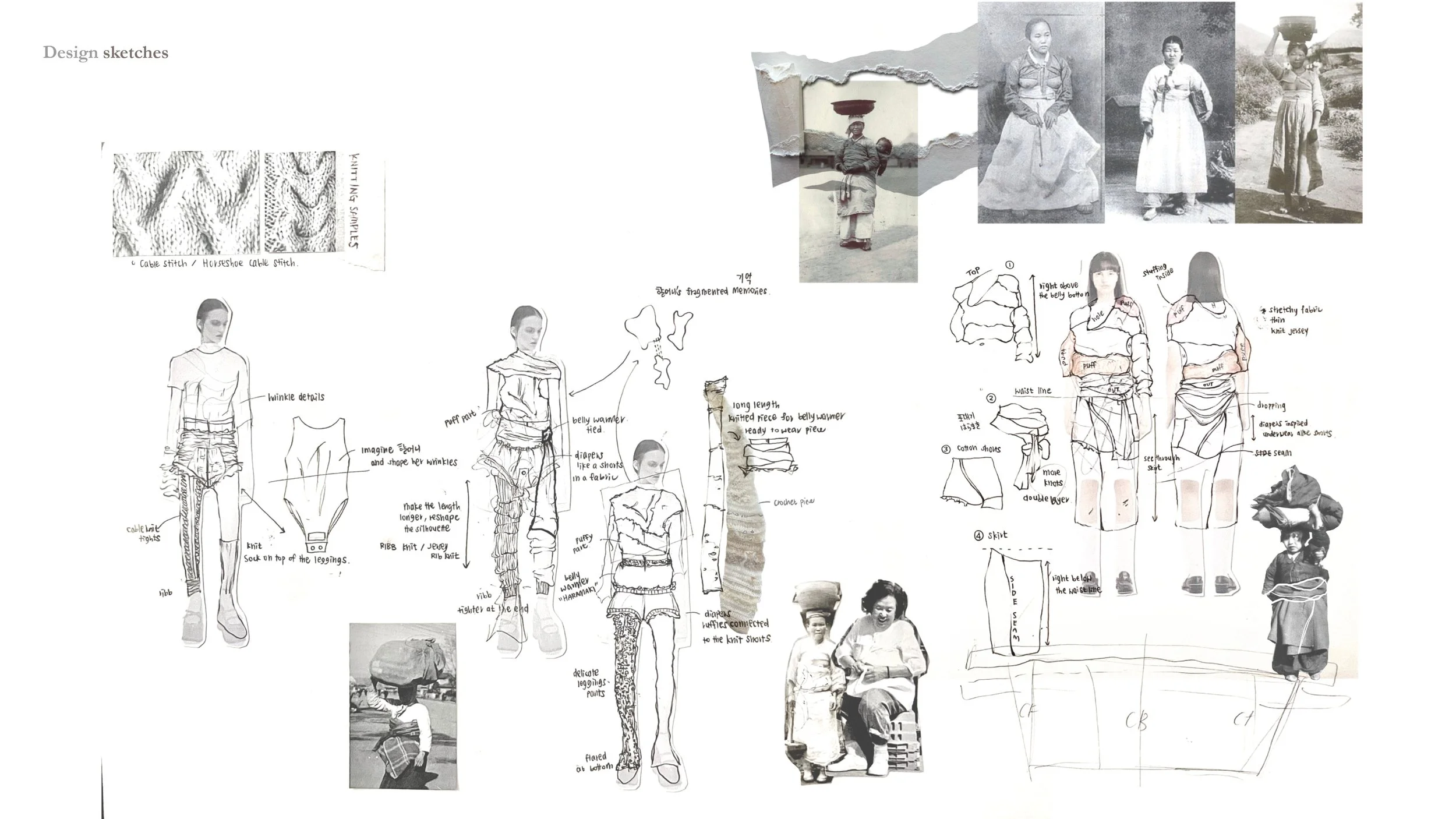
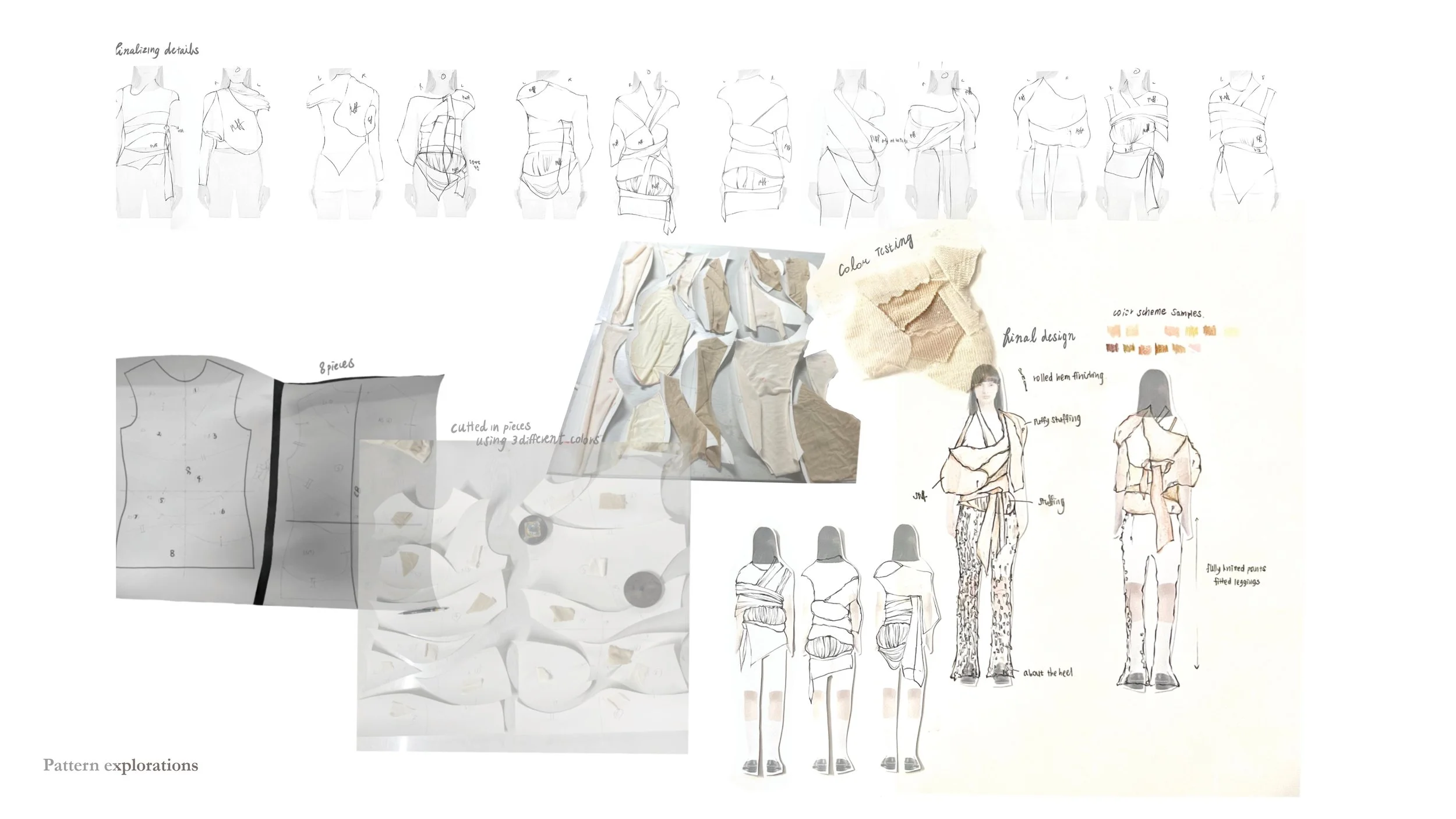
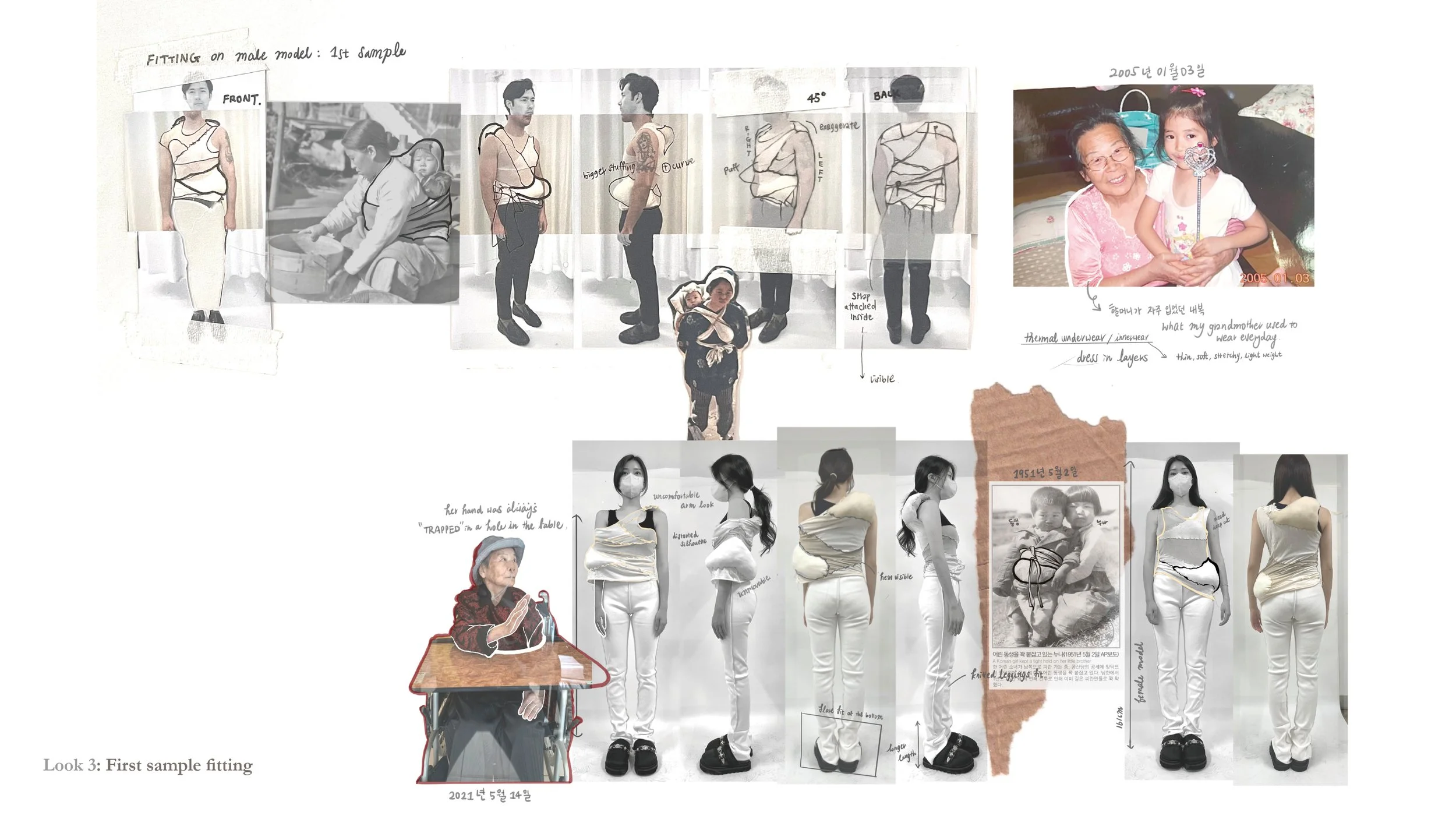
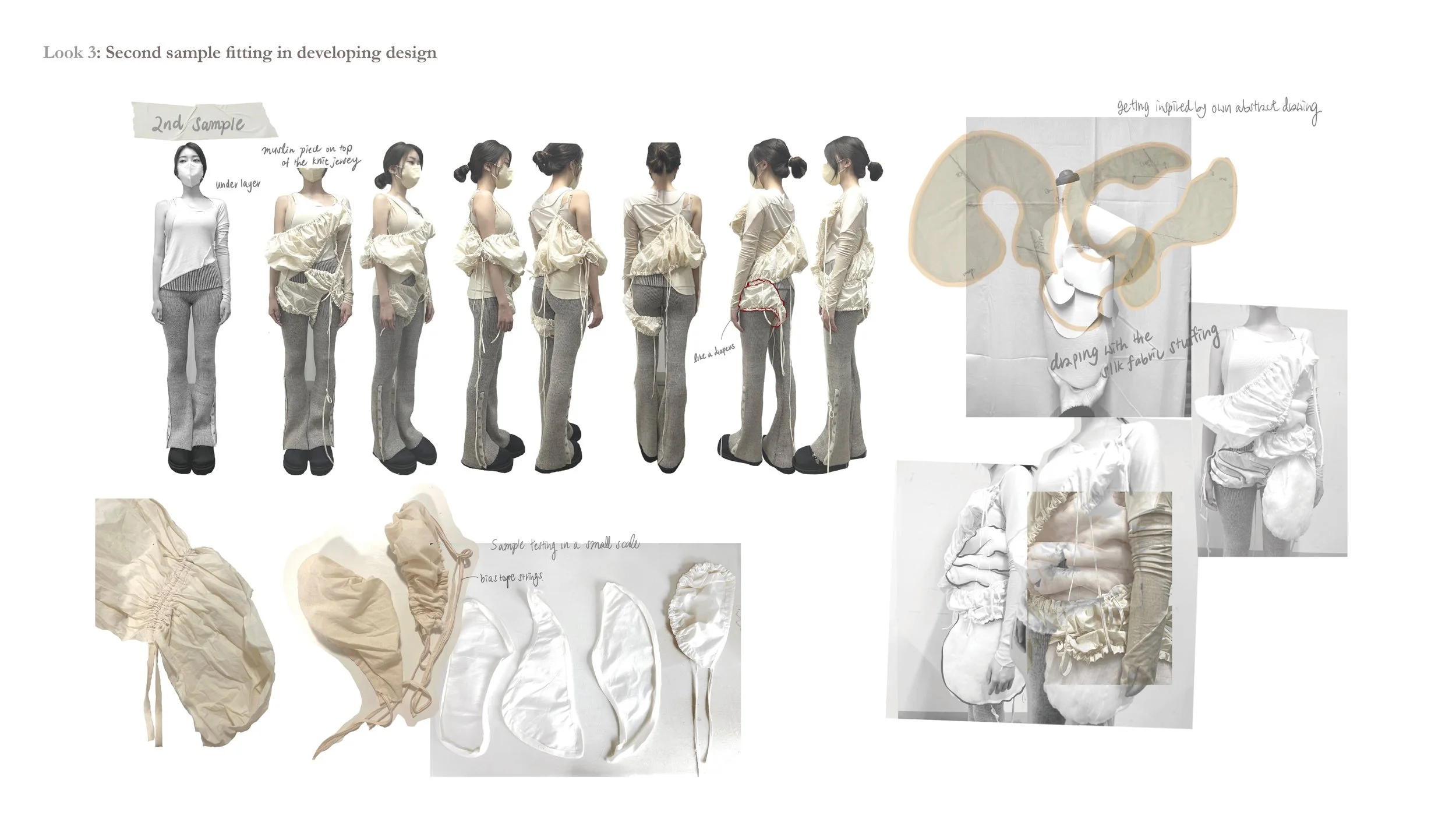
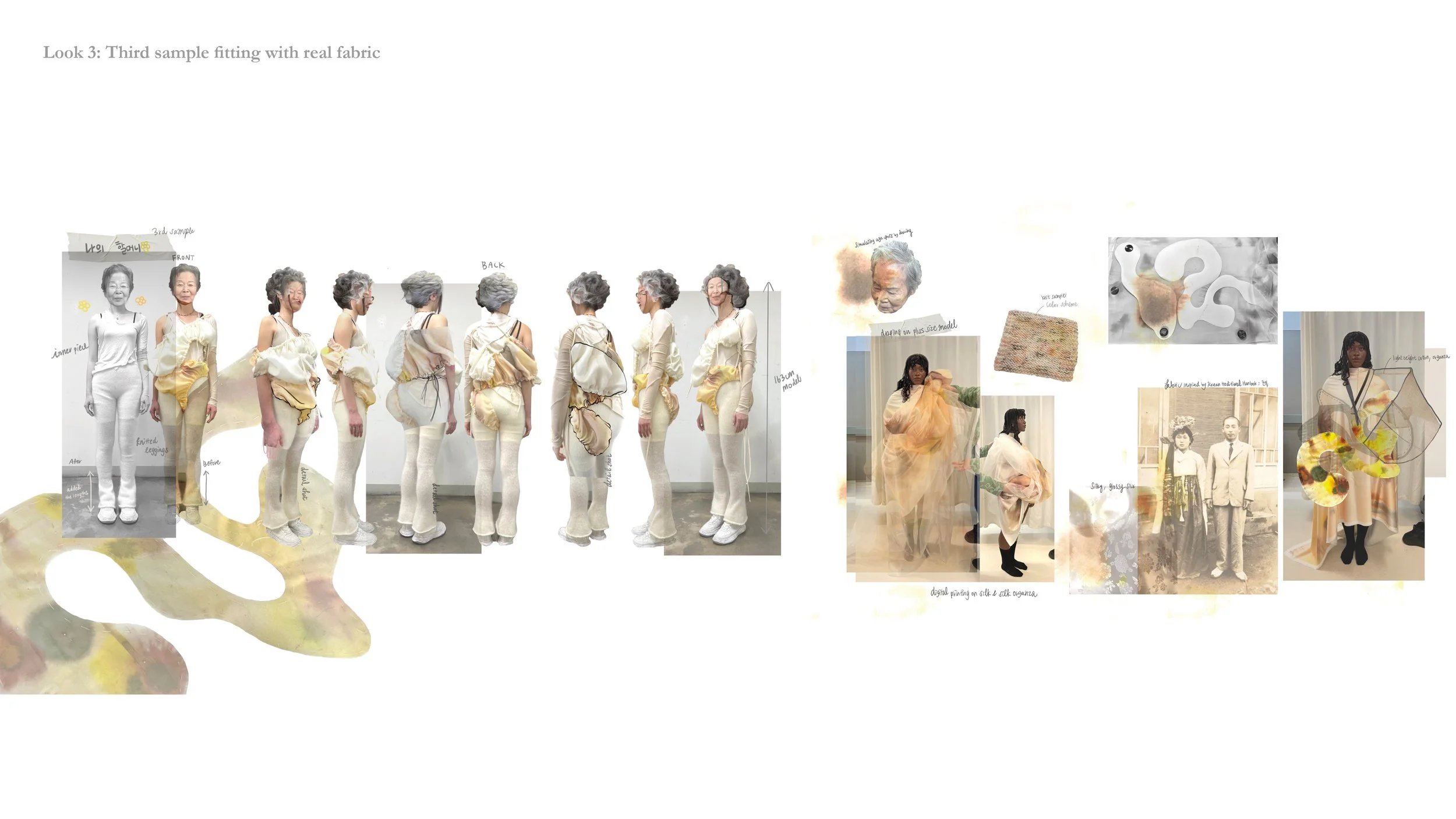
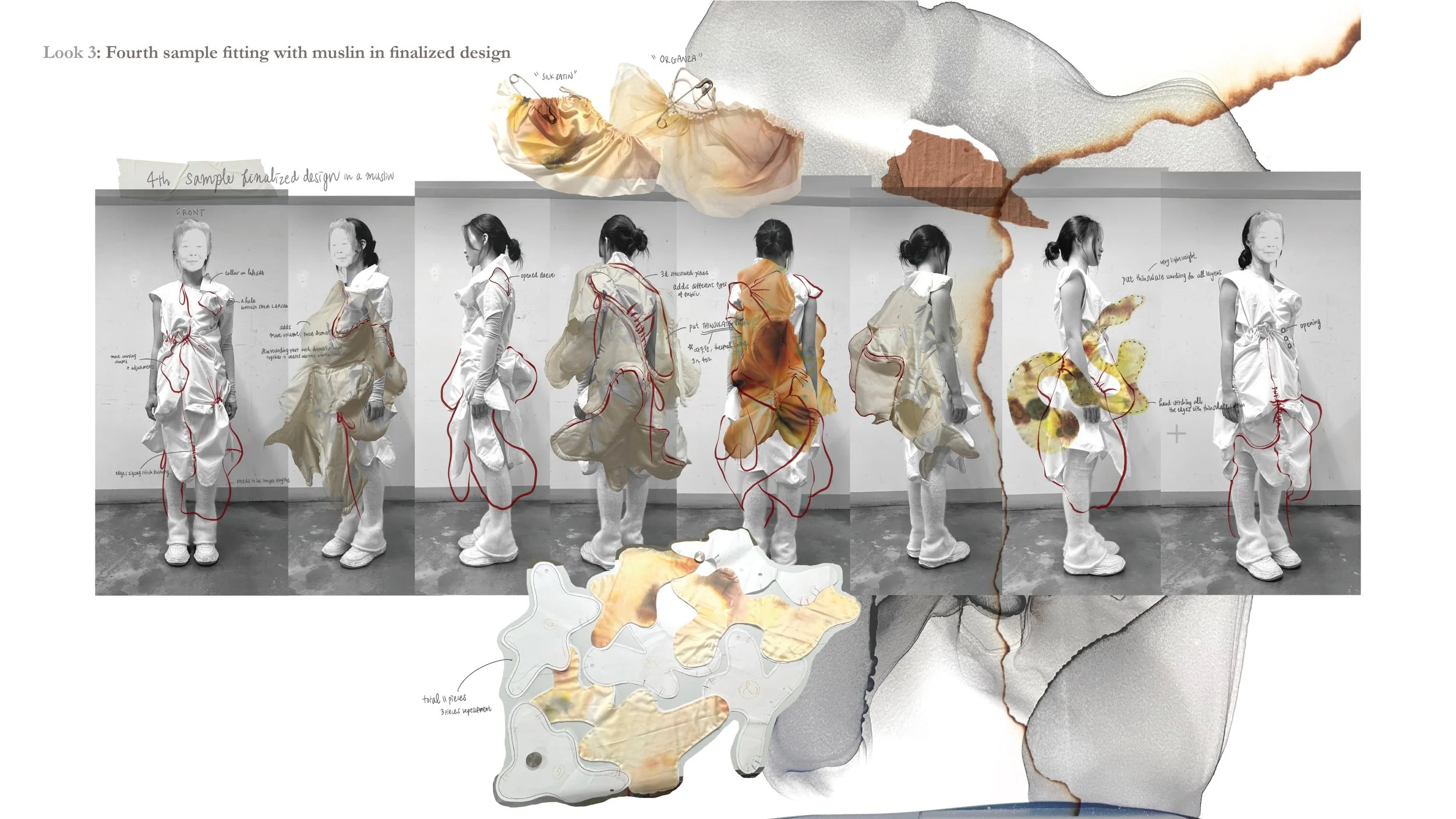
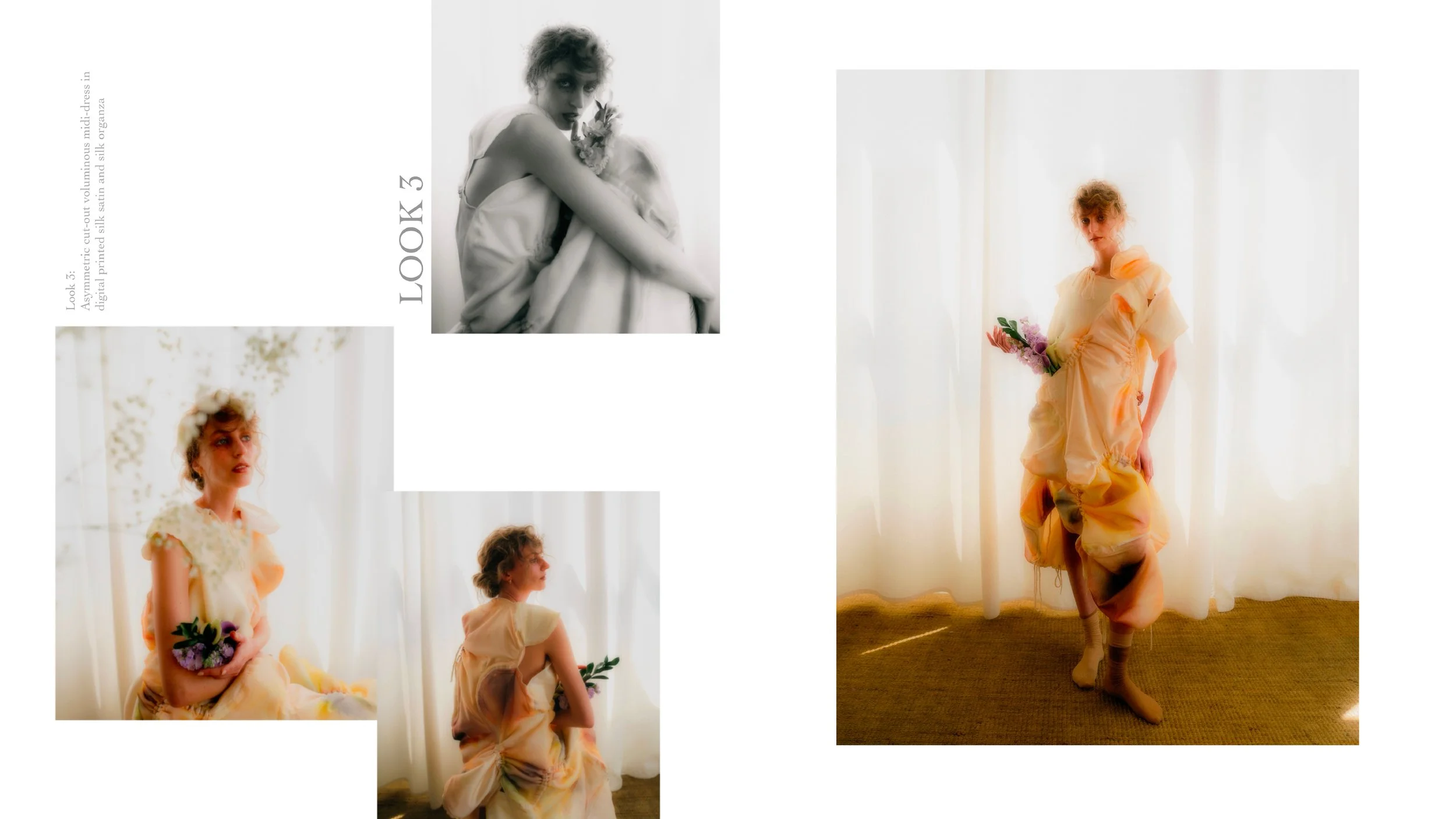
3つ目のルックは、デジタルプリントを施したシルクサテンとシルクオーガンジーを用いた、アシンメトリーなカットアウトのボリュームミディドレスです。このデザインの着想源は、幼少期の思い出である「すいとん(수제비)」の形を描いた最初のシルエットドローイングです。そこから最も印象的な形を取り出し、パネルとして拡大。最初は染色したモスリンでサンプルを制作し、その後スケールを広げてシルク生地にデジタルプリントを施しました。完成したテキスタイルは、穏やかで花のような美しさを持つ一方で、祖母の肌に刻まれた年齢の斑点を想起させます。さらに、シルクサテンやオーガンジーは韓国の伝統衣装「韓服(ハンボク)」に用いられる代表的な生地であり、古い写真に写る祖母の姿ともつながっています。このルックの鍵は、丸いパネルとドラマチックな真逆の形であるパネルをつなぎ合わせる構造にあります。それによって生まれる抽象的でランダムなシルエットは、記憶の断片や複雑な感情を映し出しています。
The third look is an asymmetric cutout voluminous midi dress crafted in digitally printed silk satin and layered with silk organza. This design was inspired by my initial silhouette drawing of sujebi. I began by extracting the most compelling shapes from the drawing and enlarging them into panel pieces. My first sample was tested with hand-dyed muslin, and later I transitioned into silk, experimenting with digital printing on a larger scale. The resulting textile holds a dual meaning: while its calm and floral aesthetics convey serenity, the printed motifs also echo the age spots on my grandmother’s skin. The choice of silk satin and organza was intentional, as these are traditional fabrics used in Korean hanbok, garments I often saw her wearing in old family photos. The key to this look lies in connecting rounded panels with dramatic shaped panels, creating an abstract sense of randomness that mirrors both memory fragments and emotional complexity.
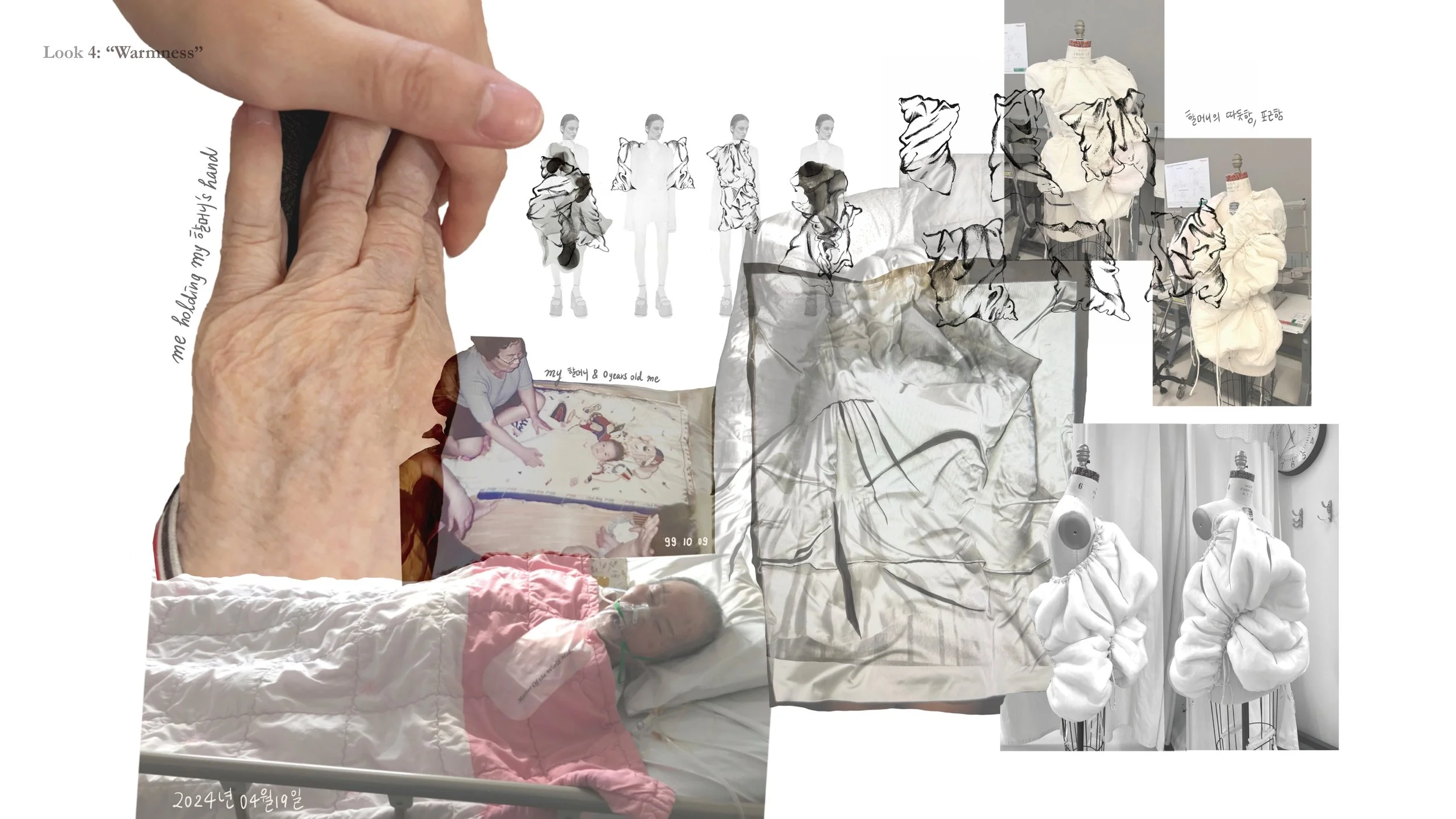
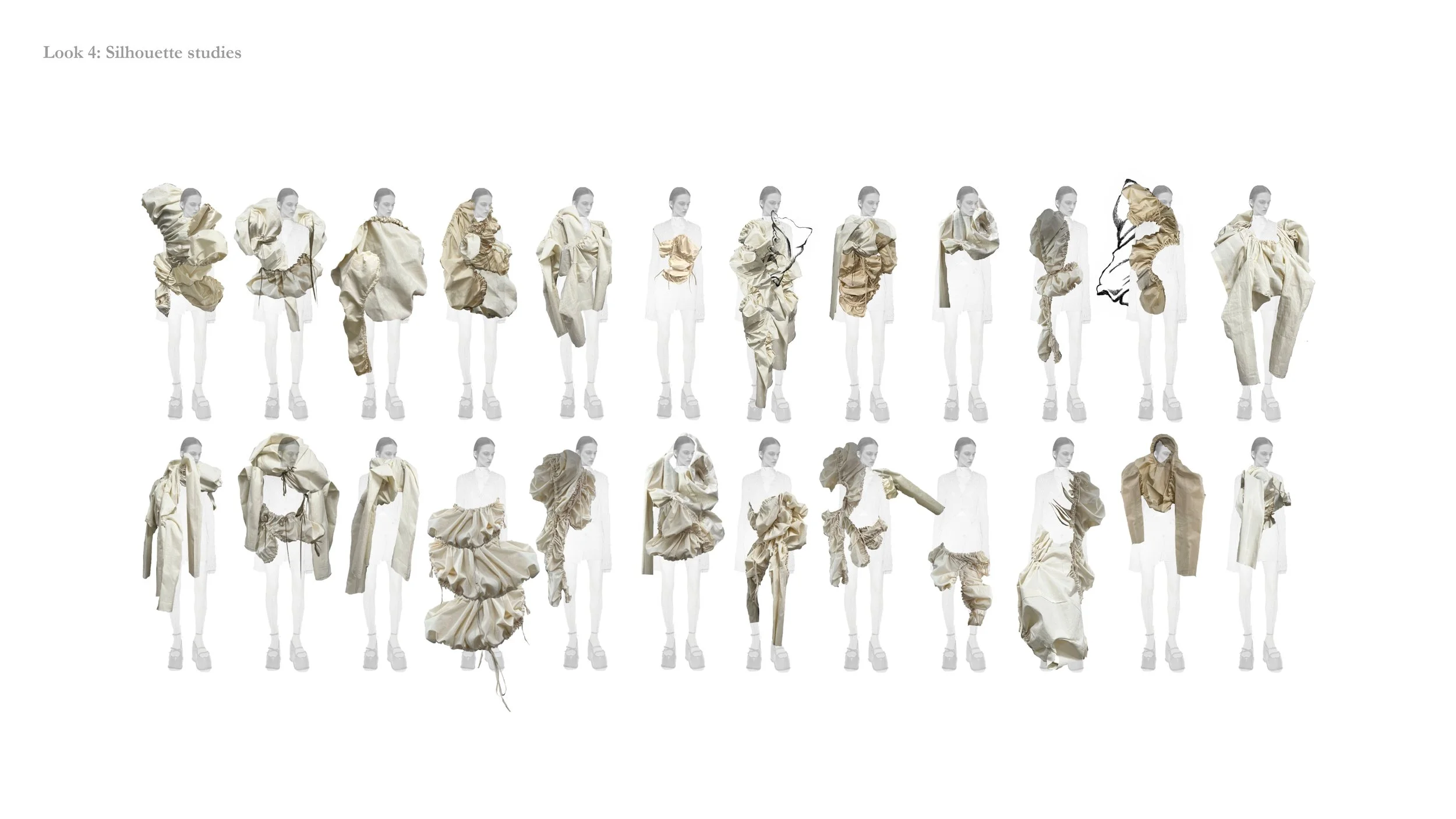
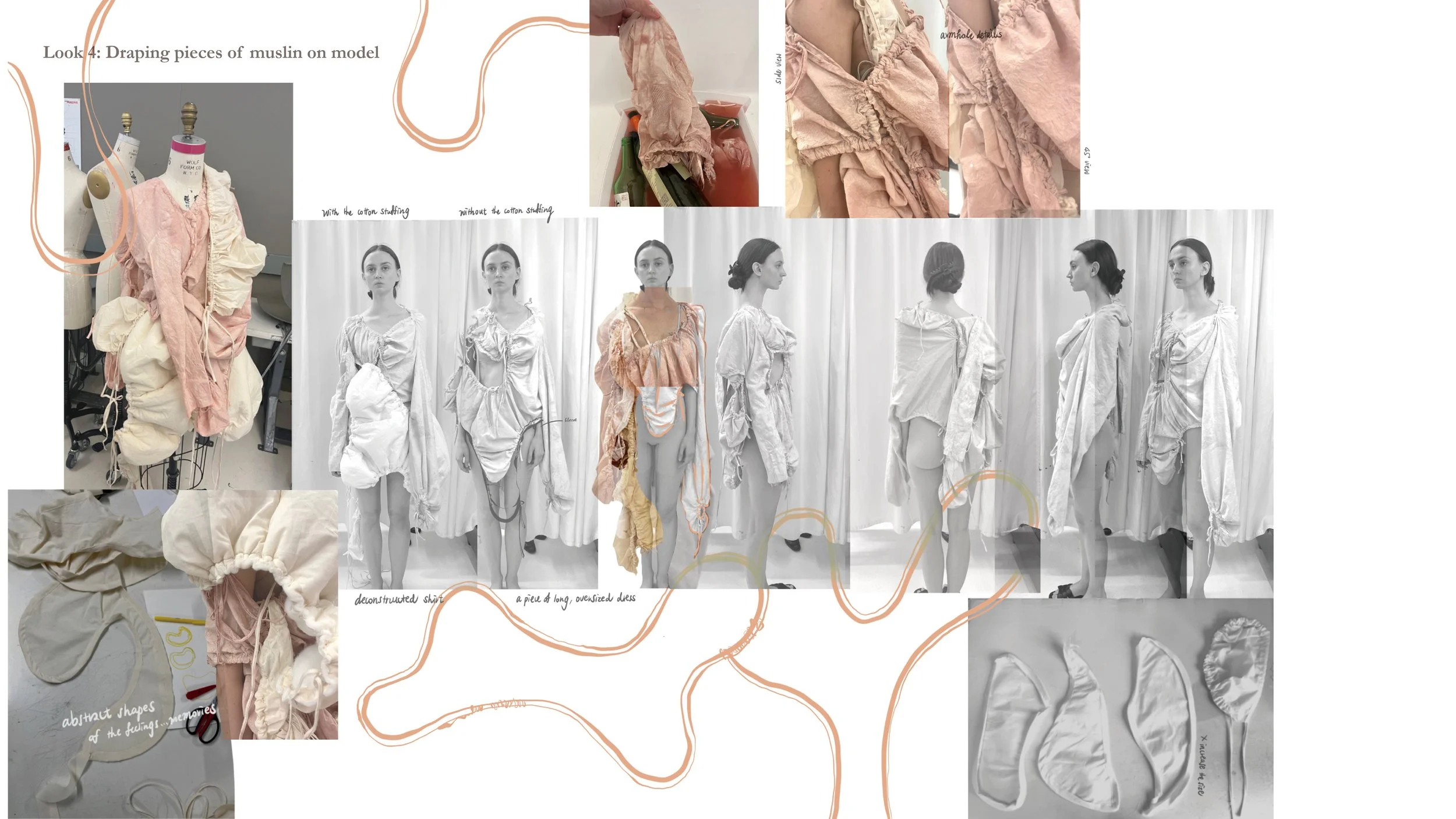
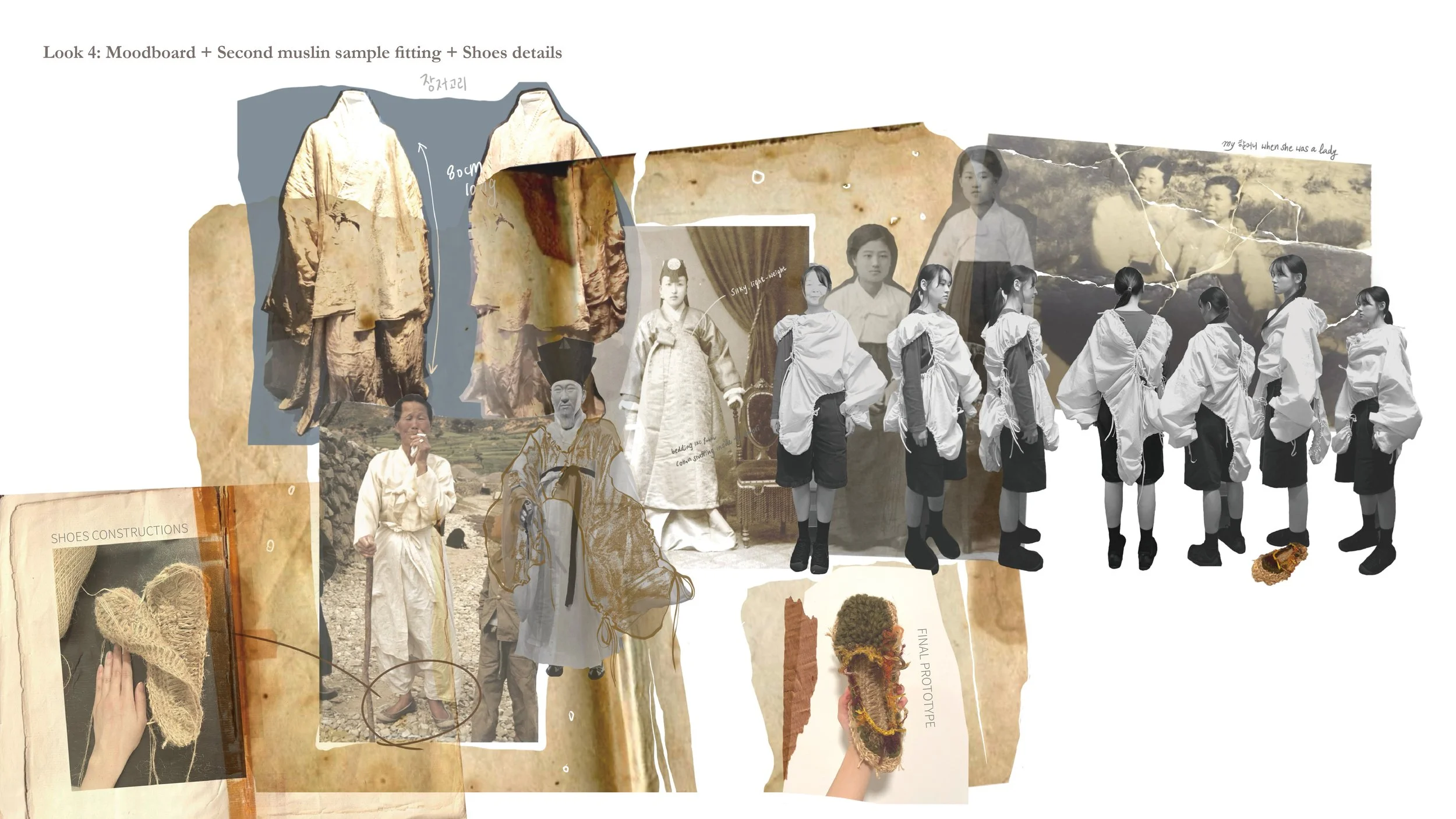

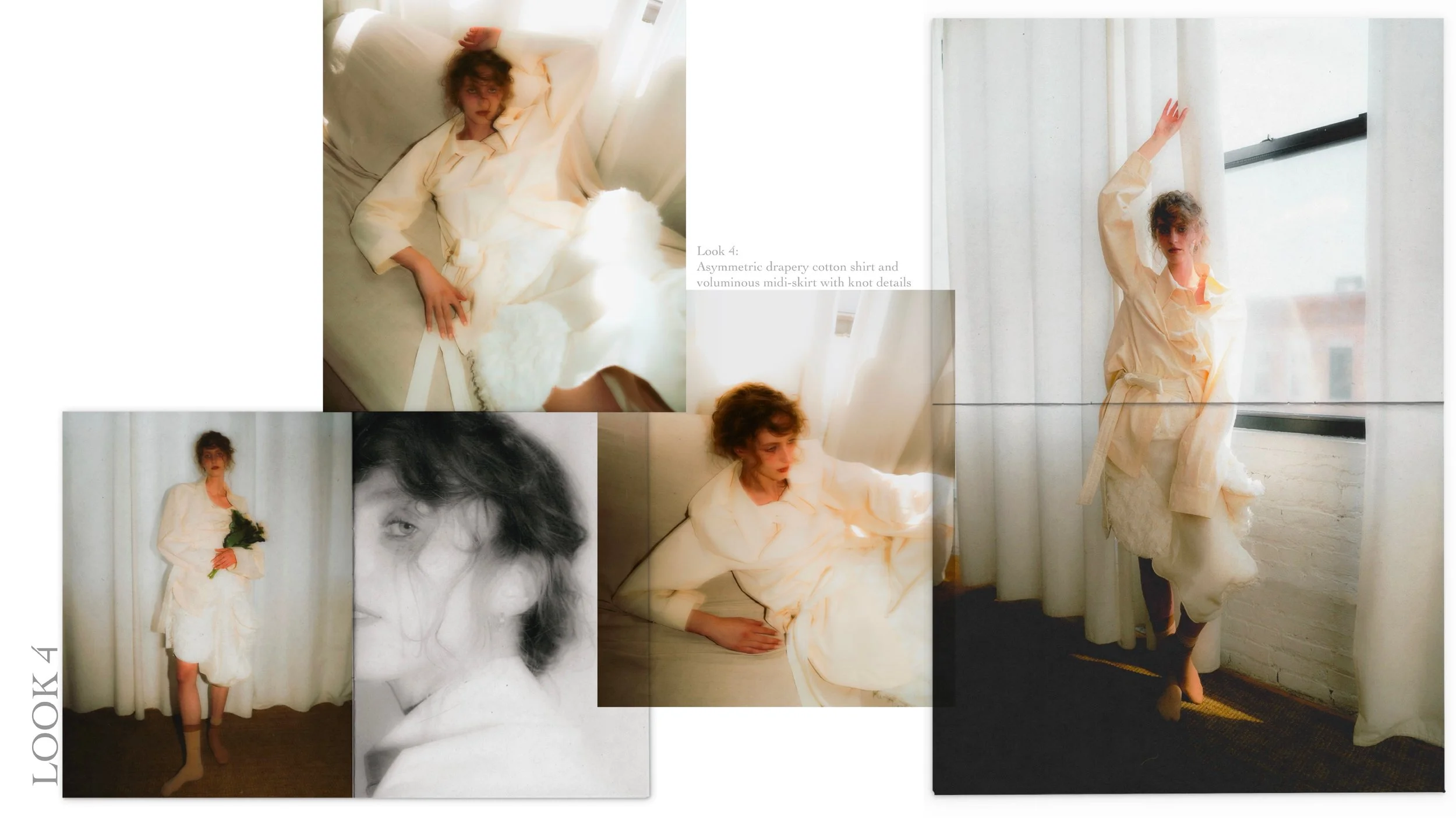
4つ目のルックは、アシンメトリーなドレープの効いたコットンシャツと、ノットディテールを施したボリュームミディスカートで構成されています。このデザインは、前の3つ目のルックと構造的に共通点を持ち、同じ丸いパネルをスカートに使用しています。ただし今回は、ウエスト部分に結び目(ノット)のディテールを加えることで独自性を持たせました。祖母の写真を見返す中で、若い頃によく着ていた韓服(ハンボク)のウエスト部分の結び目が特に印象的で、その要素を取り入れています。さらに、このシルエットは1960年代の韓国女性たちから着想を得ました。当時の女性たちは布団生地を腰にきつく巻き付け、その上から赤ん坊を抱いていました。この「締め付け」は、祖母が若い頃に直面していた苦労や忍耐を象徴していると感じています。このシルエットは、「献身」「温もり」「優しさ」「努力」といった数多くの感情を宿し、当時の強さと優しさを映し出しています。
The fourth look consists of an asymmetric drapery cotton shirt paired with a voluminous midi skirt featuring knot details. This design shares structural similarities with the third look, as the skirt is constructed using the same rounded panels. However, I introduced a distinctive detail at the waistband by incorporating knots. While revisiting my grandmother’s photographs, I was drawn to the frequent appearance of hanbok in her youth, where the knots around the waist stood out as a beautiful and symbolic feature. The silhouette was also inspired by the women of 1960s Korea, who often wrapped bedding fabrics tightly around their waists while carrying their babies. For me, this act of binding and wrapping reflects the hardships and perseverance my grandmother faced during her earlier years. I believe this silhouette embodies emotions of dedication, care, warmth, and tireless effort, capturing both the strength and tenderness of that time.
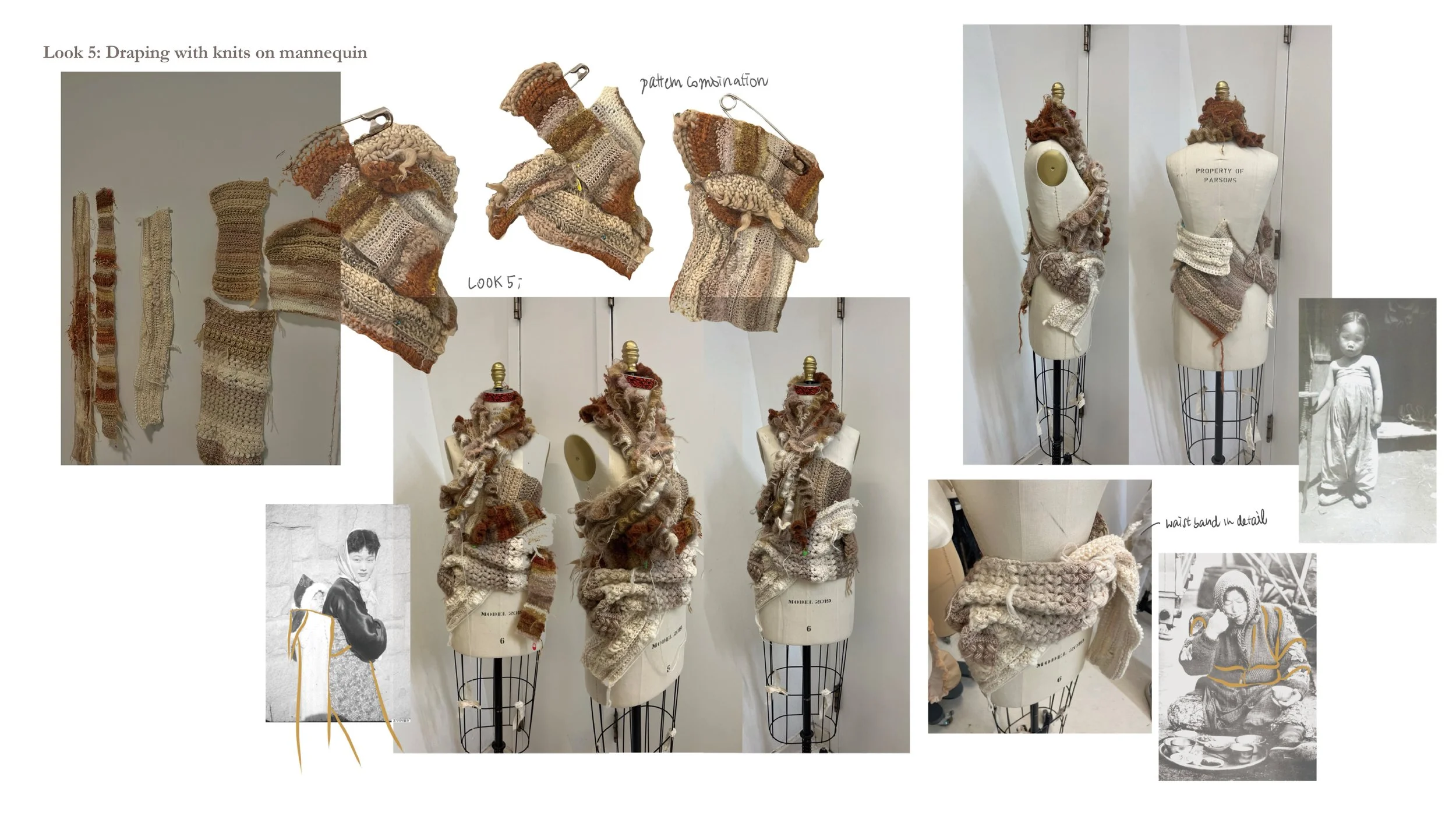
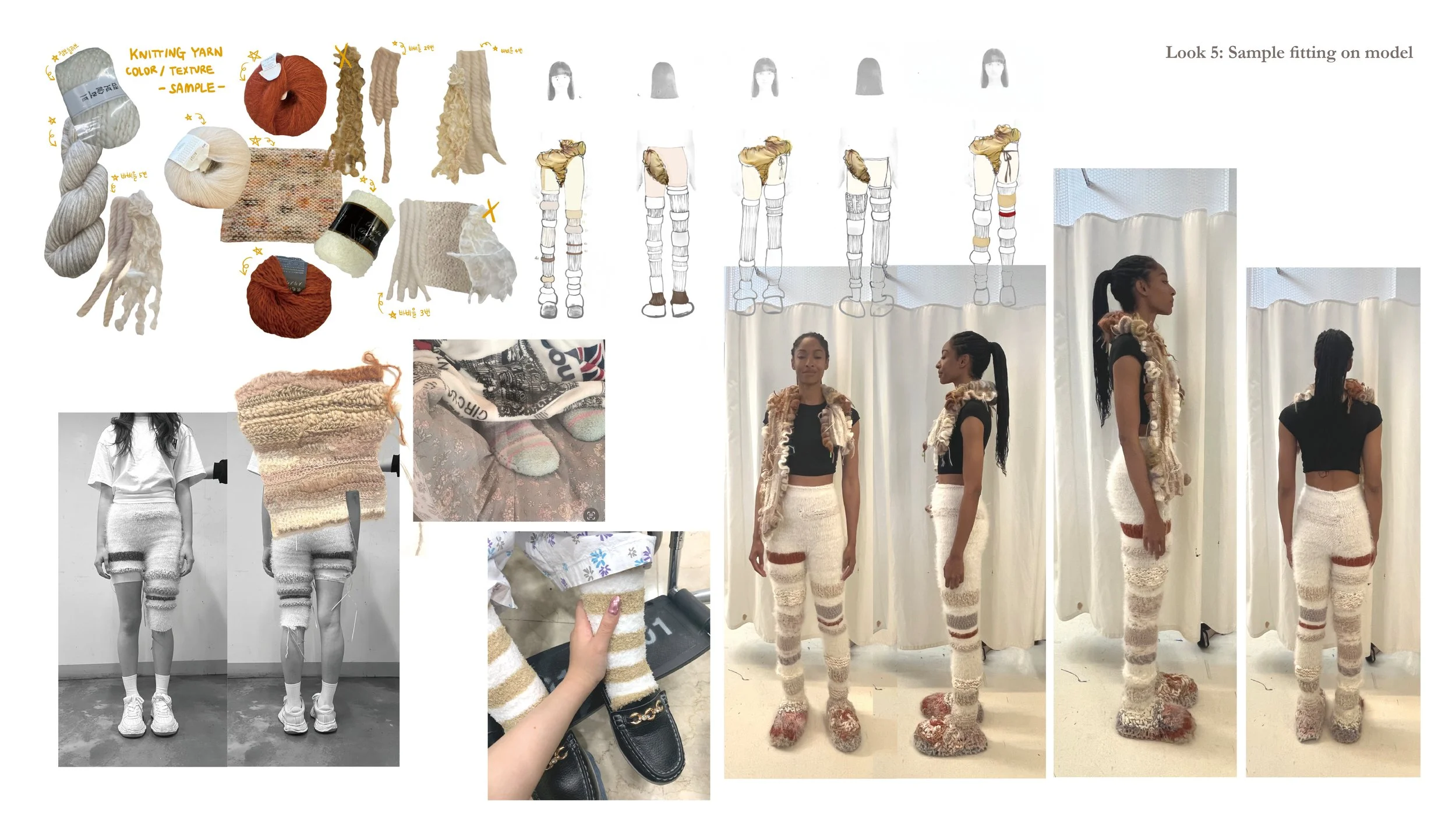
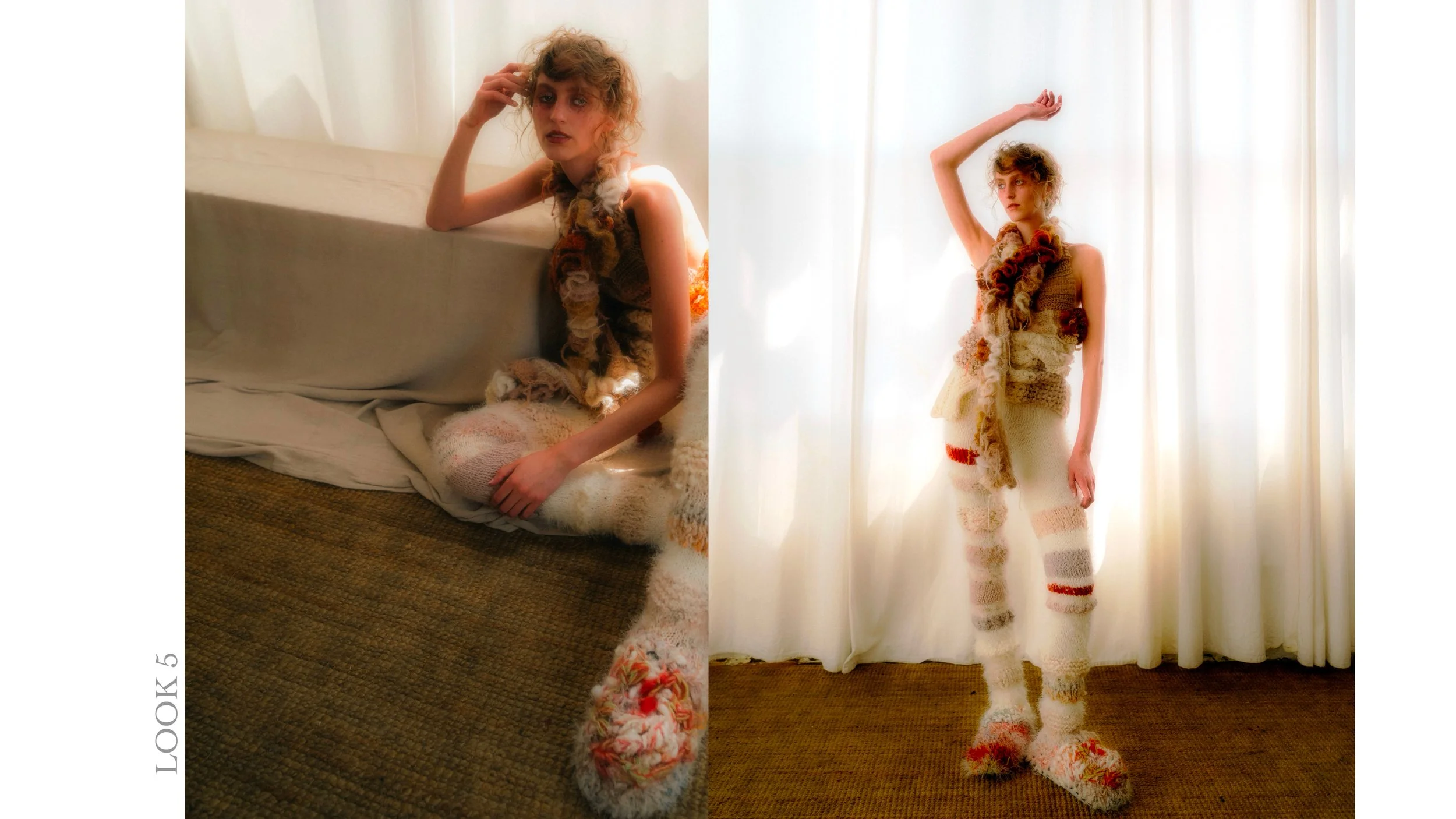
5つ目のルックは、背中が開いたニットトップにクロシェ編みのラッフルスカーフ、そしてカラフルなボーダー柄のニットパンツ靴を組み合わせています。このルックの重要な要素は、腰まわりのタイドベルトです。これは当時の女性たちが赤ん坊を抱えるために布を腰に巻き付けていた姿から着想を得ています。また、このディテールには、祖母が腰痛をやわらげるためにいつも腹巻きのような腰用サポーターを着けていた記憶を込めています。実際に私自身も子どもの頃、それを真似て身につけていたことがあります。ベルトをあえて垂らすようにデザインすることで、年齢を重ねた身体のやわらかさや温もり、そして体を支える所作を象徴しています。さらに、ネックラインはスカーフのように仕立てています。祖母が喉を冷やさないよう、いつもスカーフを巻いていた姿を思い出し、その温もりを込めました。パンツは、祖母がよく着ていた韓国の下着「内服(ネボク)」のように体にぴったりと沿うシルエットにしています。そして最後に見た祖母の姿として、縁取り模様のある靴下を履いていたことが強く記憶に残っており、それをこのルックにも反映させました。
このルックは「身体が冷えずに温もりを感じて欲しい」という願いとともに、体を支える力強さと包み込む温かさを表現しています。
The fifth look features a knit open-back top paired with a crocheted ruffle scarf and multi-colored striped knit pants with puff details. A key element of this look is the tied waistband, inspired by how women of that era would secure fabric around their waists to hold their babies. I also wanted this detail to echo the memory of my grandmother always wearing a waistband support or haramaki to ease her back pain. By letting the waistband hang loosely, it symbolizes not only the softness and fullness around the stomach but also the traces of age and the tender care of the body. The neckline was shaped to resemble a scarf, recalling how my grandmother always wore scarves to protect herself from sore throats. The pants were created in a tight-fitting silhouette, much like naebok (Korean thermal underwear), reflecting what she often wore. Even in my last memories of her, she wore socks with a border pattern, which left a strong impression on me. This look is meant to carry warmth and protection, embodying my wish that she would never feel cold.